


WEAVING
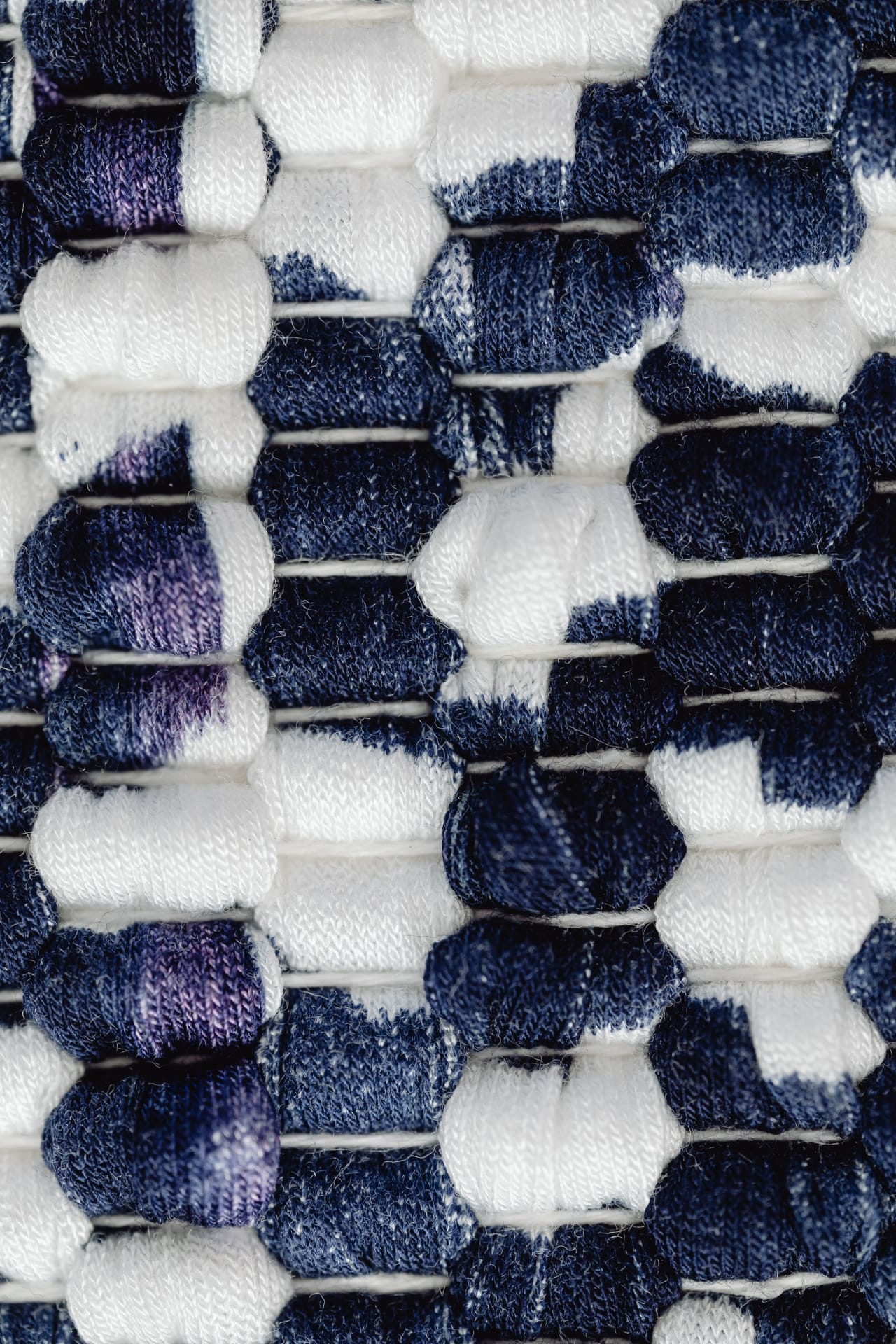
Weaving is one of humanity's oldest techniques: the making of cloth by interlacing two systems of threads — the lengthwise warp and the crosswise weft — on a loom. In Ukraine weaving was the foundation of the household economy: shirts, ritual towels and tablecloths were sewn from home-woven cloth, while patterned weaving (zakladne, perebirne) produced multicoloured ornaments without embroidery. Regional schools — Krolevets towels, Hutsul lizhnyk blankets, Polissia weaving — had their own motifs and techniques. Weaving requires warp preparation, rhythm and precision. Today hand-weaving is returning as a value of slow, authentic fashion and local craft.
Weaving is a fundamental technique of fabric creation that has existed for over 12000 years. In Ukraine, weaving is an integral part of culture — from Trypillian linen fabrics to Carpathian lizhnyk blankets, Polissia ridenkyy towels, Hutsul weaving. Each region has its own features.
Technical palette: plain weave, twill weave, satin weave, jacquard weave (with pattern), tapestry weave. Contemporary Ukrainian masters — Forma, Etnodim, Spell — return weaving to fashion through lizhnyk blankets, tapestry wall panels, linen towels, traditional striped plakhta skirts. Ukrainian weaving has unique color schemes and ornaments passed from generation to generation.




