


AMBER
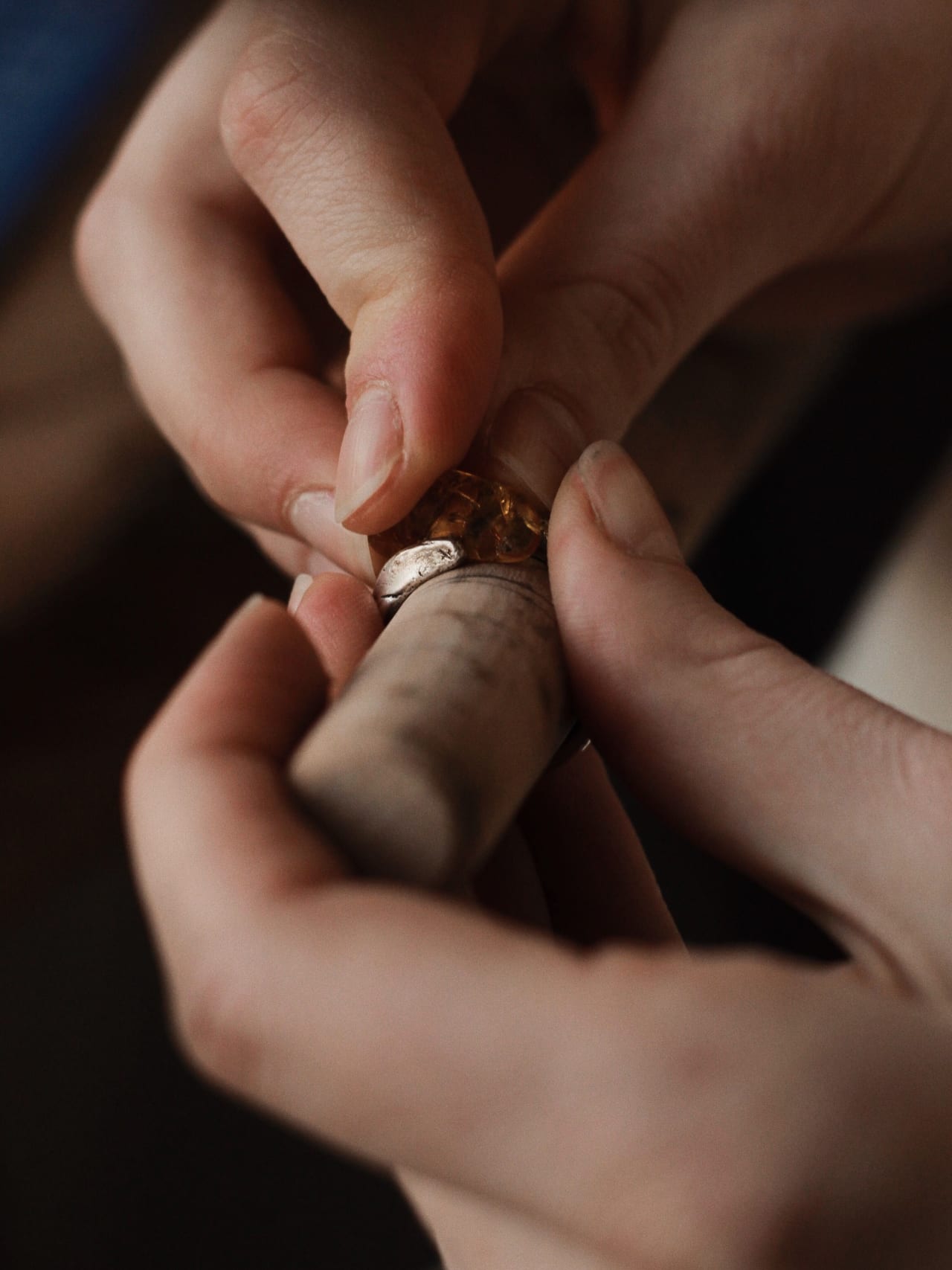
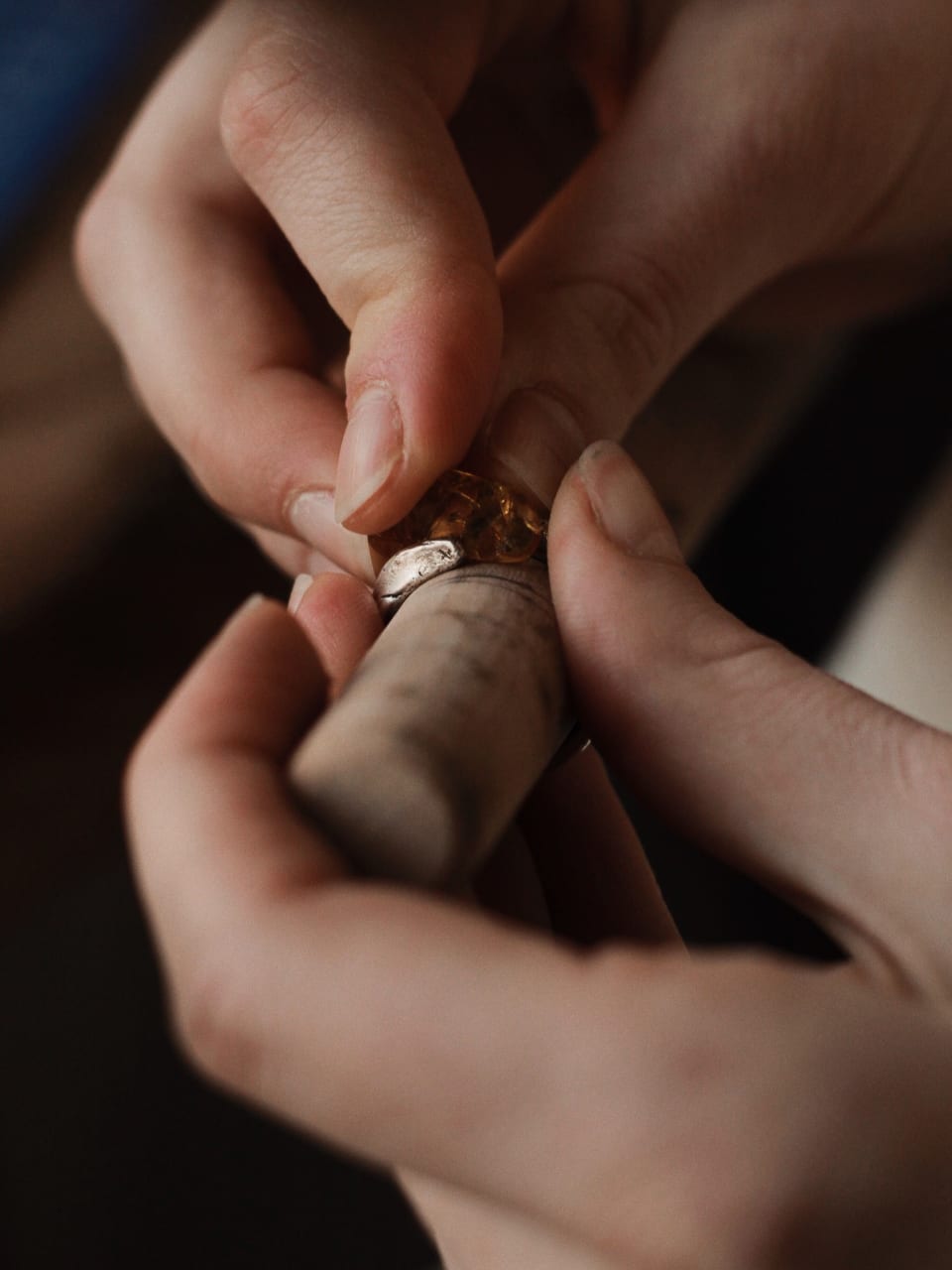
Amber is not a stone but the fossilised resin of ancient coniferous or flowering trees, tens of millions of years old; sometimes insects or plants of those eras are frozen inside it. Ukraine is one of the amber capitals of the world: Volyn-Polissia amber (Rivne, Volyn) has long been prized for its warm honey colour and lightness. In folk tradition amber (an 'amber necklace') was worn as a talisman of health and, by belief, protection from illness. To the touch it is warm, light and becomes electrostatic when rubbed. Amber is worked gently, preserving its natural inclusions and shades — from light honey to dark cherry. It is an organic, 'living' gem with a deep connection to the Ukrainian land.
Compare “Amber” with another term
Meaning, origins and distinction — side by side.
Distinction
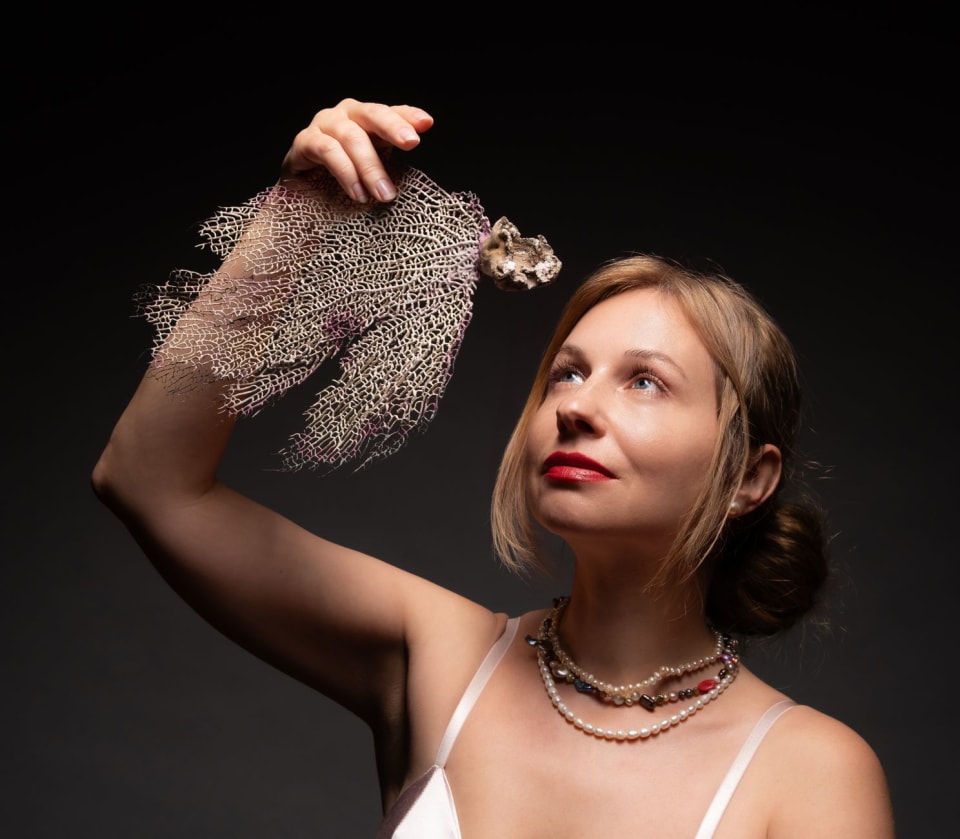
Both are organic gems born of living nature rather than mineral crystals. Amber is the fossilised resin of ancient trees, light and warm to the touch, ranging from honey yellow to cognac brown, sometimes with insects frozen inside. Coral is the calcareous skeleton of marine polyps, denser and heavier, classically red, pink or white. Amber is warm and translucent, coral matte and solid; both are treasured in ethnic and folk jewellery traditions across many cultures.




