



AQUAMARINE

Aquamarine is a transparent precious stone of a tender blue or greenish-blue colour, a variety of beryl (a relative of the emerald). Its name comes directly from the Latin aqua marina — 'sea water', which perfectly describes its transparent, fresh, wave-like hue. Historically aquamarine was considered a stone of sailors, giving protection on voyages and calm; it symbolises purity, youth and fidelity. The stone has fine transparency and a glassy lustre, facets well, and large clear specimens are especially valuable. Its tender colour makes jewellery fresh and elegant. Aquamarine is a transparent precious stone the colour of sea water, in which a fresh, tender blue combines with an ancient symbolism of the sea, purity and protection, giving jewellery a feeling of cool, crystalline and calm elegance.
Compare “Aquamarine” with another term
Meaning, origins and distinction — side by side.

Distinction
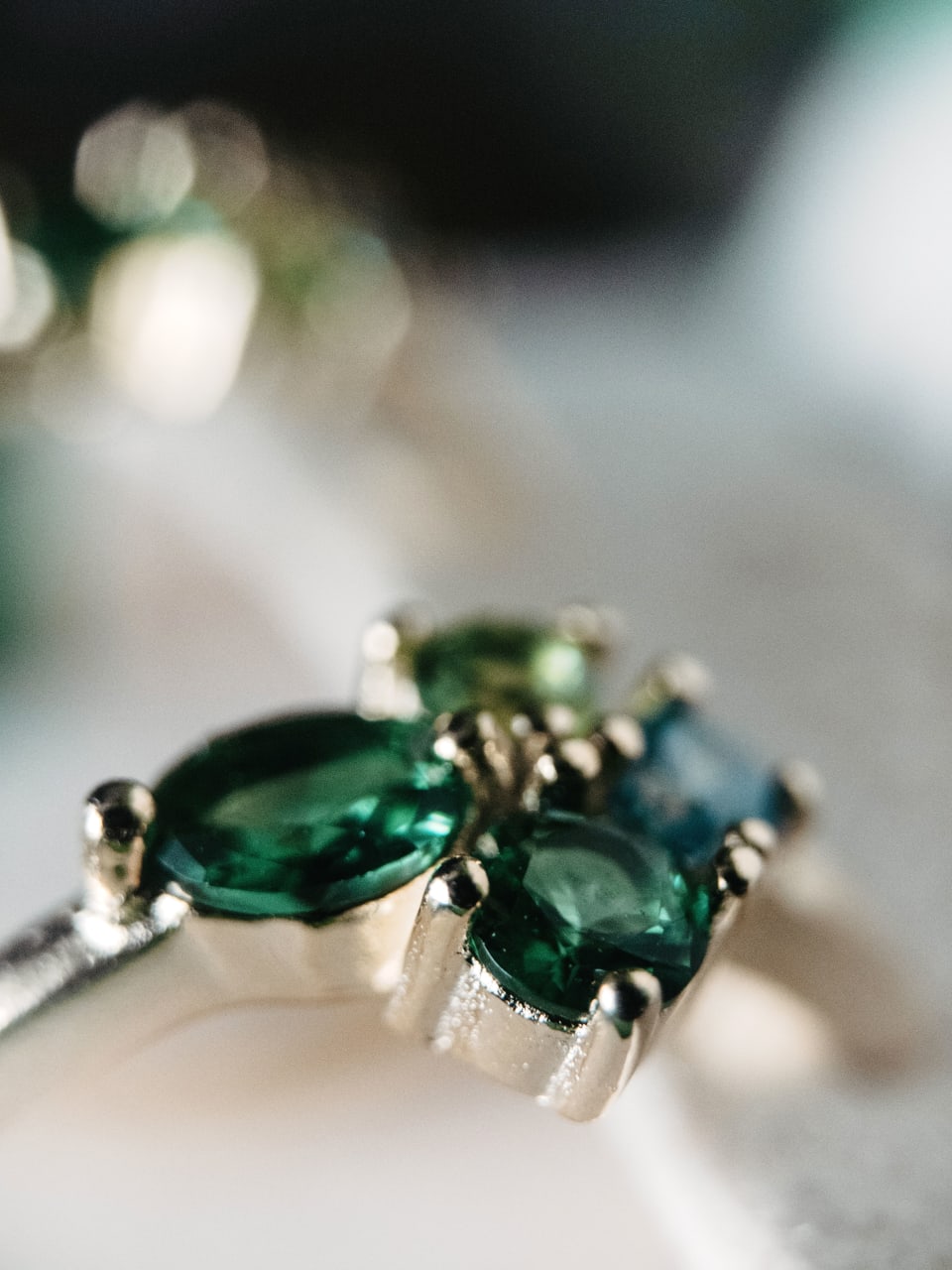
Both stones belong to the same mineral, beryl, so they differ only in the trace elements that colour them. Emerald is tinted by chromium and vanadium to a rich grassy green, and it almost always contains internal inclusions that jewellers fondly call a garden. Aquamarine is tinted by iron to a clear sky blue and is usually far cleaner, with few visible flaws. Emerald is more brittle and more costly, while aquamarine is harder, clearer and calmer in tone.




