



BATIK
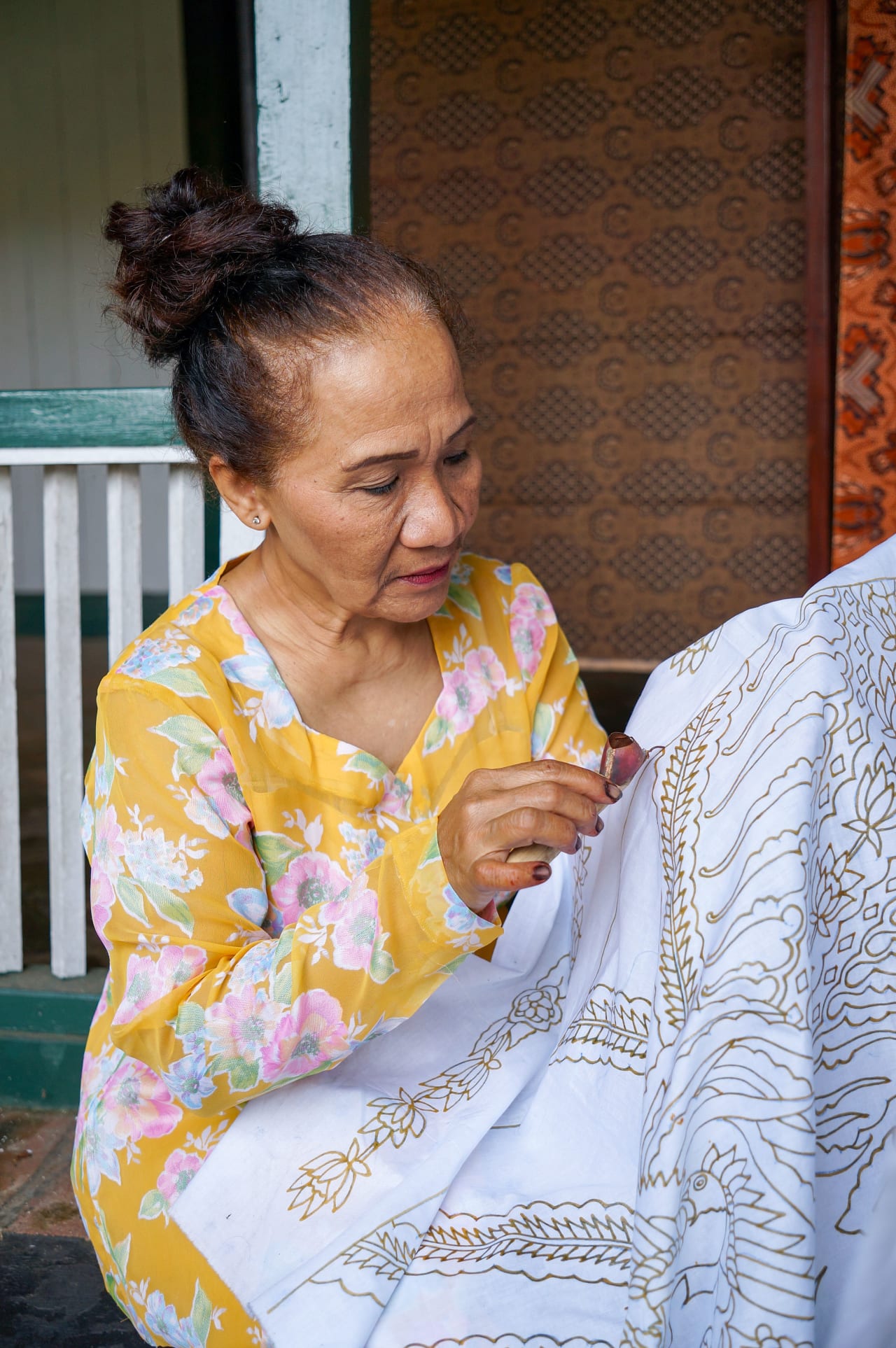
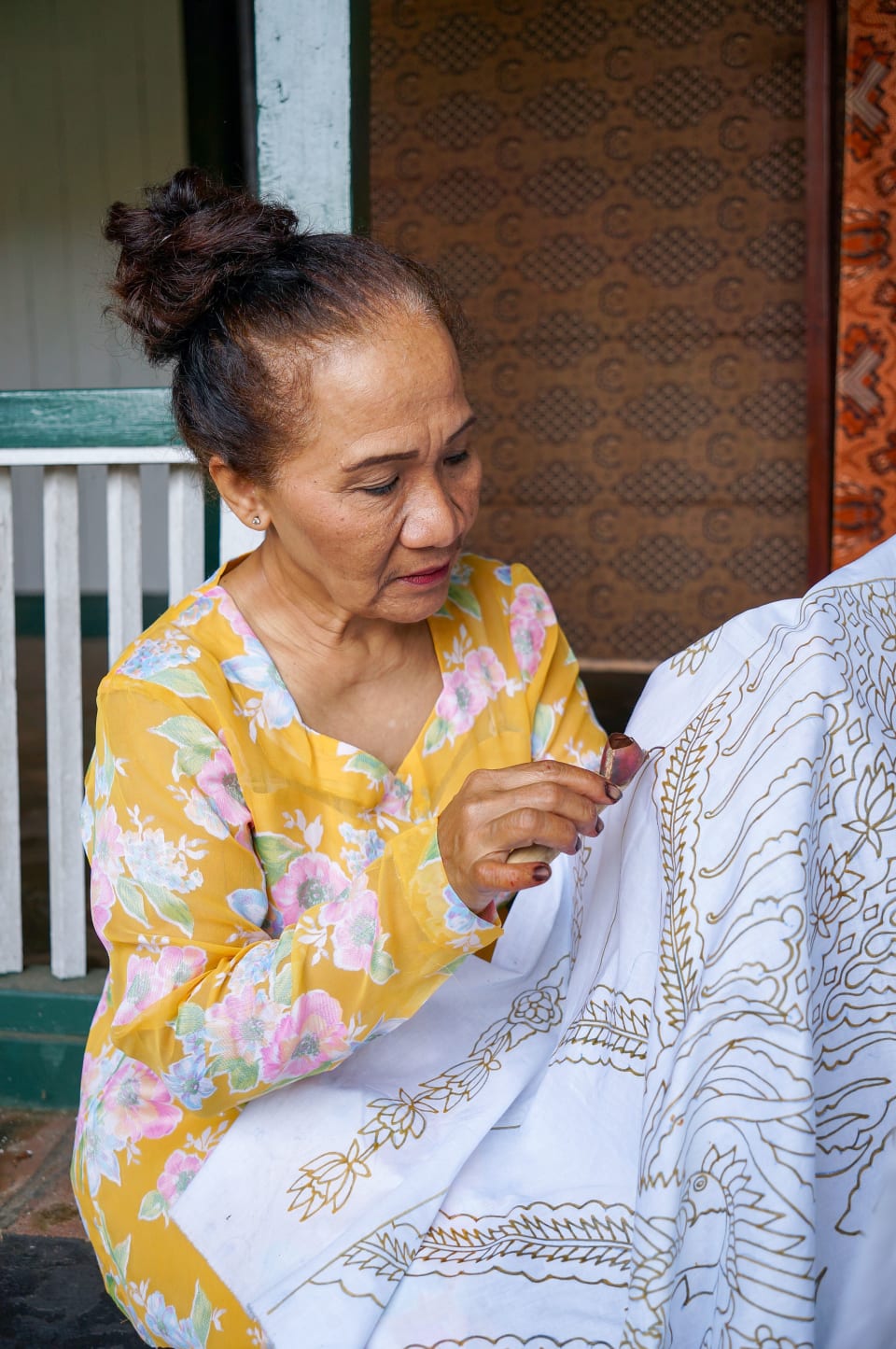
Batik is a technique of hand-painting fabric using wax as a resist. The maker applies hot wax to the areas that are to stay undyed, then the cloth is dipped in dye, and the wax keeps out the colour; by repeating this with different colours, a multi-layered pattern is built. The word comes from Javanese (Java, Indonesia), where the technique became one of the most sophisticated, while wax-resist dyeing was known since antiquity in other cultures too (Egypt, China, India), but today batik is an international art. Its signature trait is the fine 'marbled' cracks that appear where the wax breaks. Batik is used to paint scarves, dresses, panels and accessories. It is a slow, almost meditative technique in which every piece is unique and carries the maker's hand.
Compare “Batik” with another term
Meaning, origins and distinction — side by side.
Distinction
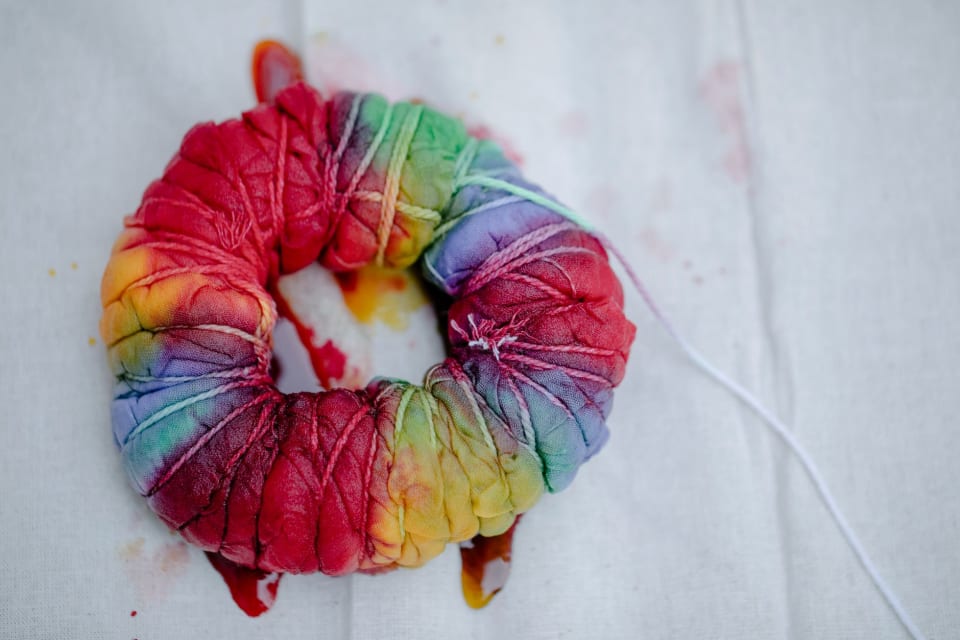
Two resist-dyeing techniques that protect areas of cloth in different ways. Batik uses hot wax as the resist: it is applied to the fabric, which is then dyed, and cracks in the wax create the signature veined pattern. Tie-dye resists mechanically — the cloth is twisted, knotted or bound so dye cannot reach the folds, forming concentric bursts of colour. Wax versus knot: two roads to a pattern.




