


SATIN
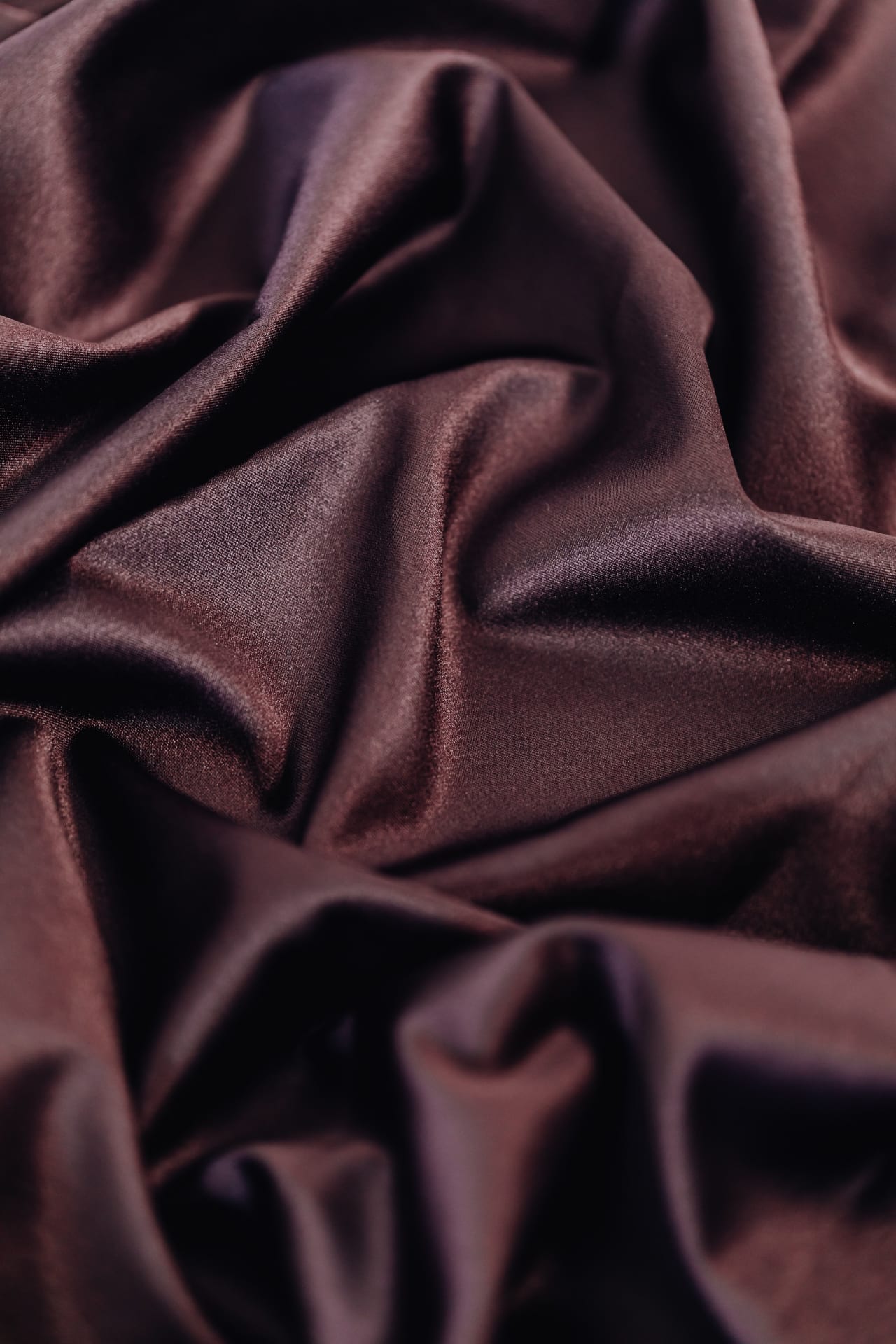
Satin is defined not by a fibre but by a weave: in the satin weave the warp threads 'float' over the surface with few interlacings, which is what gives the face its smooth, mirror-like sheen and the reverse its matte finish. Historically woven from silk, today it is also made from viscose or polyester. Satin drapes superbly, flows over the body and catches the light, which makes it indispensable for evening gowns, bridalwear, lingerie and linings. It is also demanding: it snags easily, reveals every flaw in the cut and calls for careful handling.
Compare “Satin” with another term
Meaning, origins and distinction — side by side.
Distinction
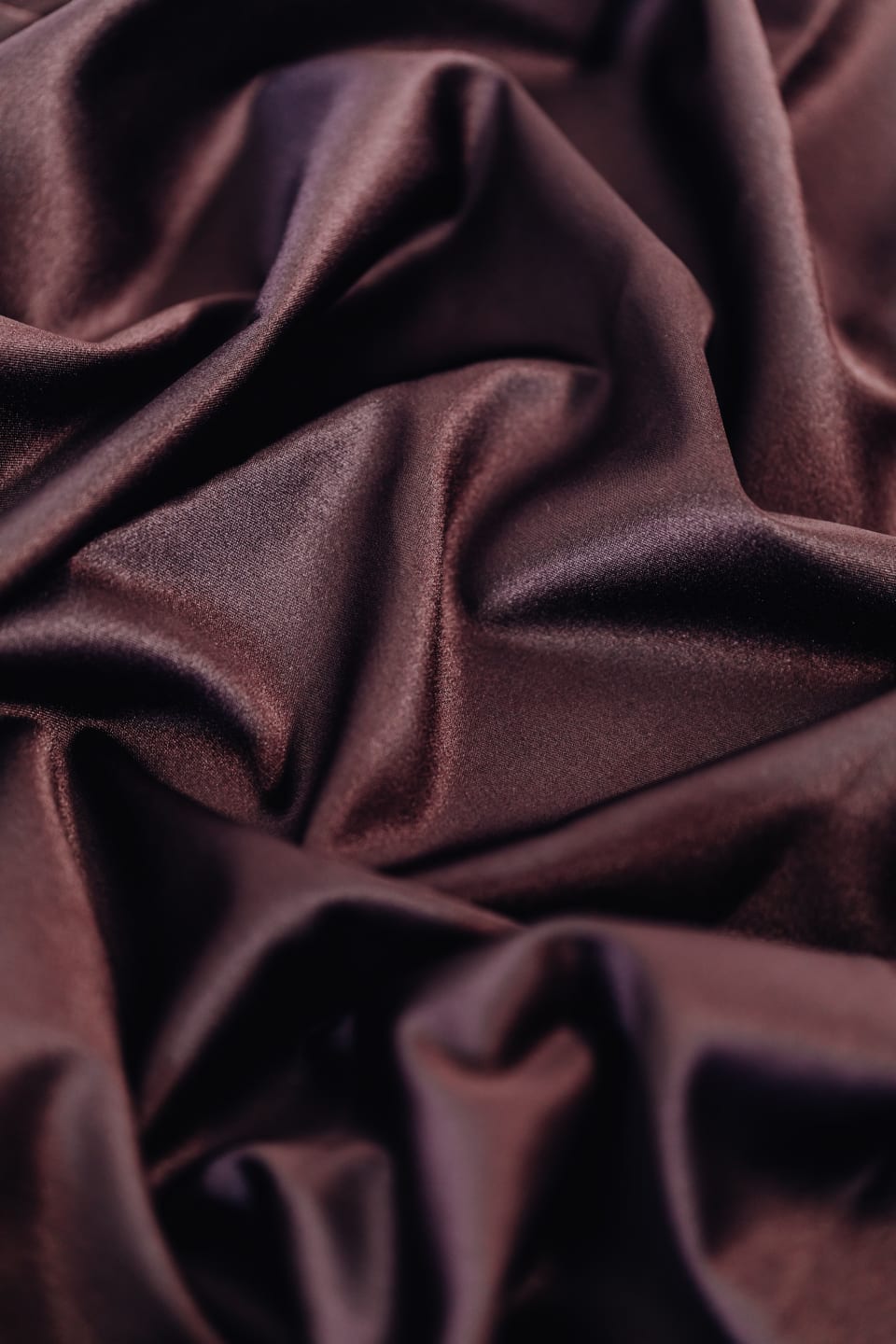
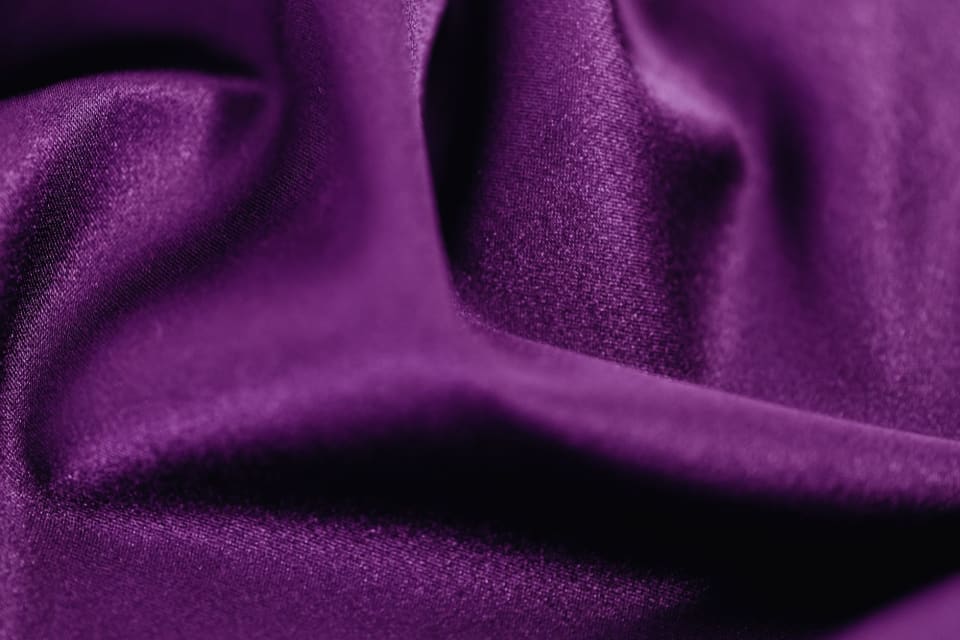
Satin names a weave, not a fibre: long floating warp threads create a dense, substantial cloth that is glossy on the face and dull on the back. Charmeuse uses the same satin weave but in a lighter, finer construction, so it is soft, fluid and drapes like liquid with a subtler sheen. Satin holds structure in ball gowns, while charmeuse clings and pours over the body in lingerie and slip dresses.




