



SHIBORI
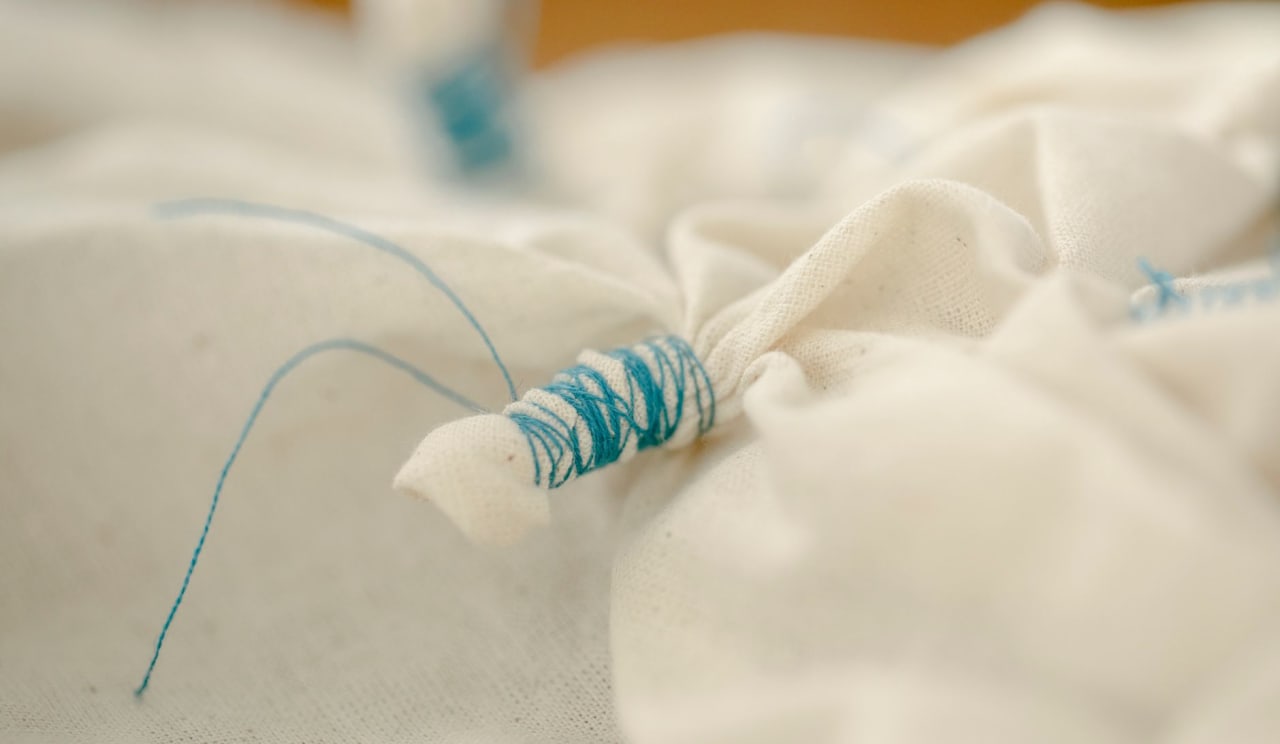
Shibori is an ancient Japanese technique of resist dyeing of fabric, in which the cloth, before being immersed in dye (traditionally indigo), is folded, twisted, tied, sewn or clamped to protect part of the fibre from the colour. Where the fabric was drawn together, light, 'undyed' areas remain, forming characteristic organic patterns — circles, waves, 'cobwebs', gradients. Every piece is unique, since a pattern cannot be exactly repeated. Shibori is a Japanese form of tie-dye (practised since the 8th century), but far finer and more refined. The technique requires mastery in tying and an understanding of the behaviour of the dye. In fashion shibori is valued for its deep, 'living' colour and the uniqueness of each pattern. Shibori is a technique of resist dyeing as an art, in which the masterful folding and binding of fabric before dyeing creates unique, organic patterns of deep indigo with a fine Japanese aesthetic.
Compare “Shibori” with another term
Meaning, origins and distinction — side by side.
Distinction
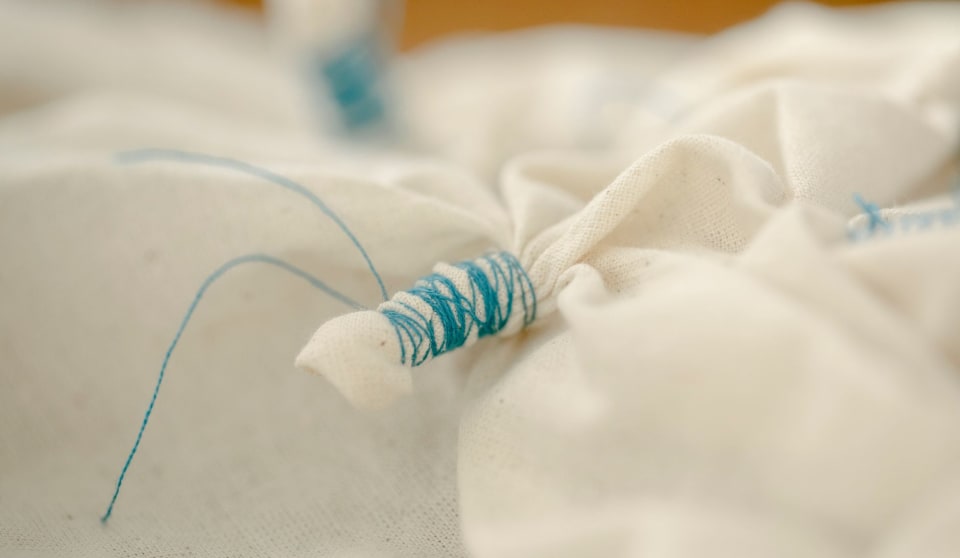
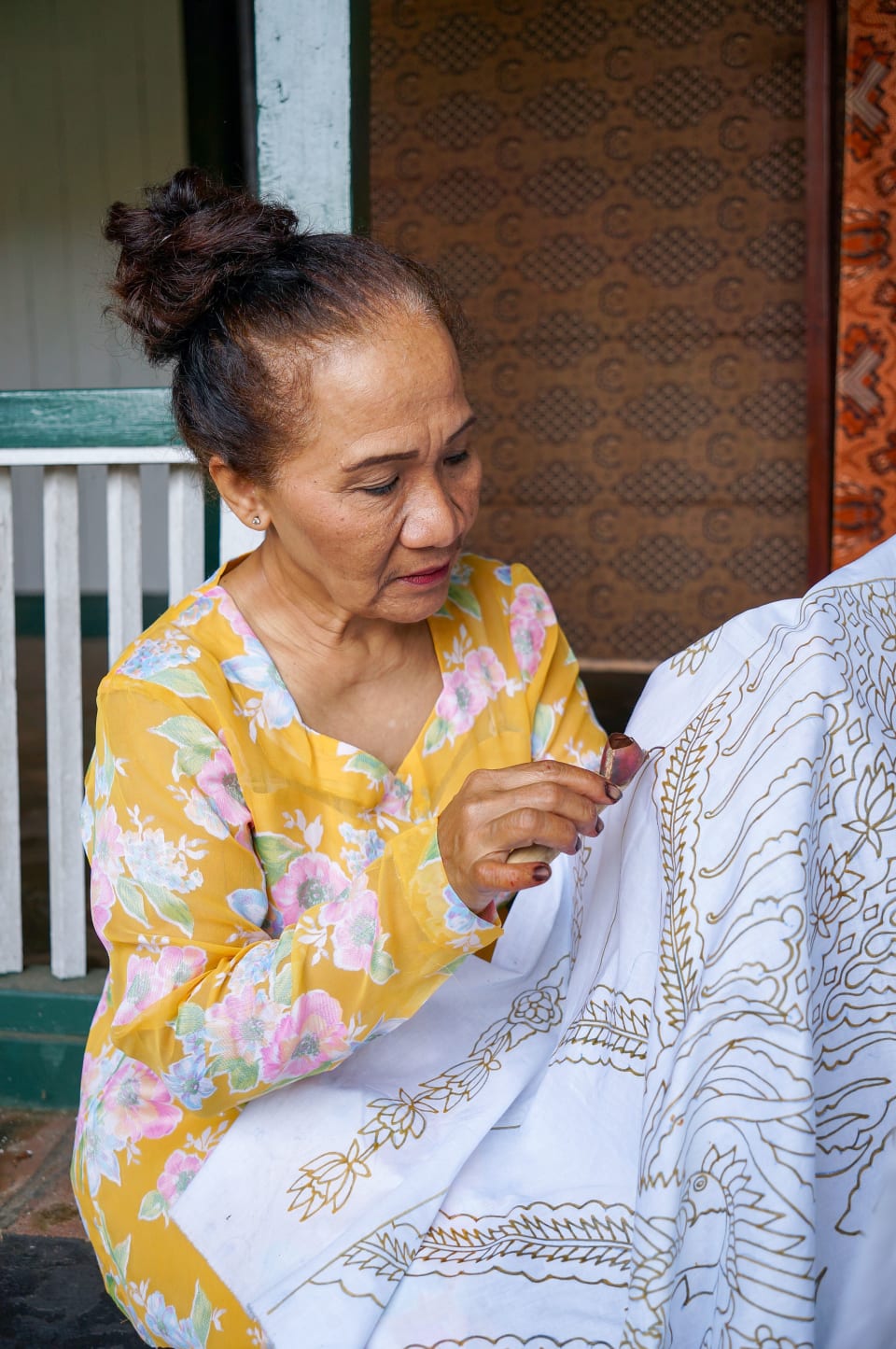
Both techniques are resist dyeing, where part of the cloth is shielded from the dye, but the resist differs. Batik uses hot wax: it is applied in a pattern, the fabric is dipped in dye, and the wax is later melted out, leaving pale lines with characteristic crackle veins. Shibori resists the cloth mechanically, folding, twisting, stitching or clamping it before immersion, so the pattern is born from the creases. Batik draws with wax, while shibori shapes its motifs through compression.




