


Jewelry as an Accent43 pieces
Jewelry
From minimalist author pieces to heirloom family treasures.
Amber
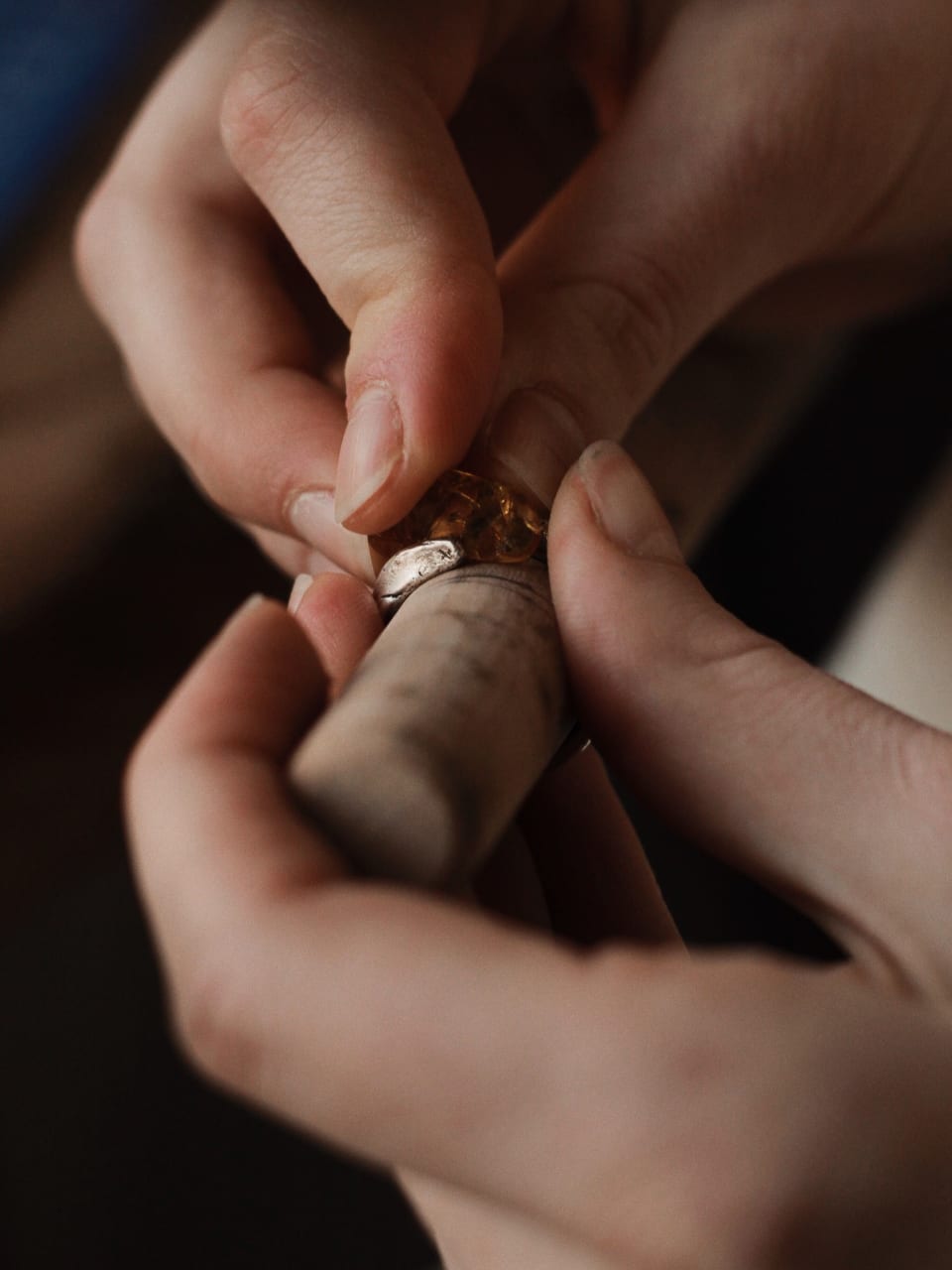
Amber is not a stone but the fossilised resin of ancient coniferous or flowering trees, tens of millions of years old; sometimes insects or plants of those eras are frozen inside it. Ukraine is one of the amber capitals of the world: Volyn-Polissia amber (Rivne, Volyn) has long been prized for its warm honey colour and lightness. In folk tradition amber (an 'amber necklace') was worn as a talisman of health and, by belief, protection from illness. To the touch it is warm, light and becomes electrostatic when rubbed. Amber is worked gently, preserving its natural inclusions and shades — from light honey to dark cherry. It is an organic, 'living' gem with a deep connection to the Ukrainian land.
Amethyst
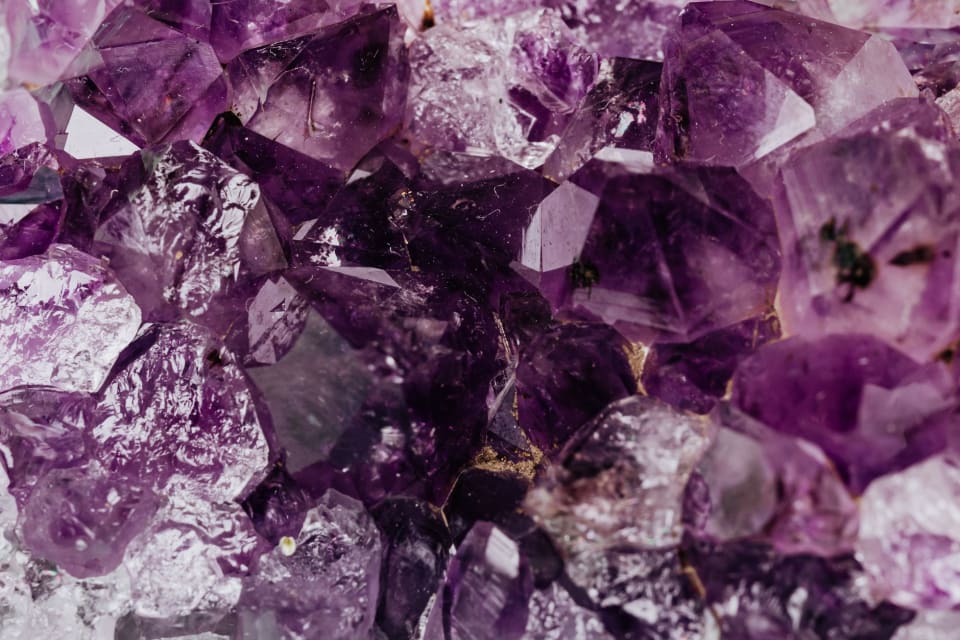
Amethyst is a semi-precious variety of quartz of a characteristic violet colour, from tender lilac to deep purple. Historically amethyst was a stone of kings and clergy, a symbol of power, wisdom and spiritual purity; its name comes from the Greek amethystos — 'not intoxicated', because the stone was believed to protect from drunkenness. Amethyst facets well, plays with light beautifully and has a noble, 'royal' hue. It is one of the most popular and affordable precious stones, and large, clear specimens are especially valuable. It combines beautifully with silver and gold. Amethyst is a semi-precious stone of noble violet colour, in which an ancient symbolism of power, wisdom and purity combines with a deep, 'royal' hue that makes it one of the most beloved and expressive stones of the jeweller's art.
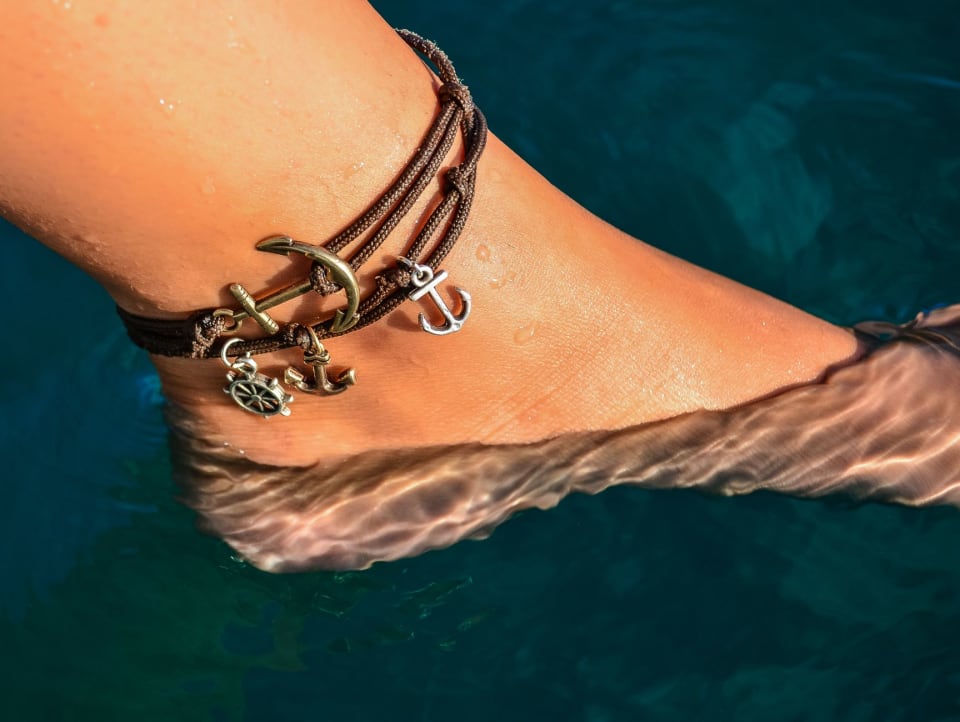
Anklet
An anklet is an ornament that wraps the leg just above the foot. It is one of the oldest forms of body adornment, widespread in many cultures — from Ancient Egypt and India (where anklets with little bells had a ritual meaning too) to modern beach and resort fashion. An anklet accentuates the leg and the line of the foot, adding lightness, femininity and effortless sensuality to a look. It is worn mostly in summer, with open footwear or barefoot, often on tanned skin. It comes thin and delicate (a chain) or expressive, with pendants, beads or bells. An anklet is a leg ornament with ancient roots in many cultures, in which wrapping the ankle accentuates the line of the foot, adding summer lightness, femininity and effortless, slightly exotic sensuality to a look.
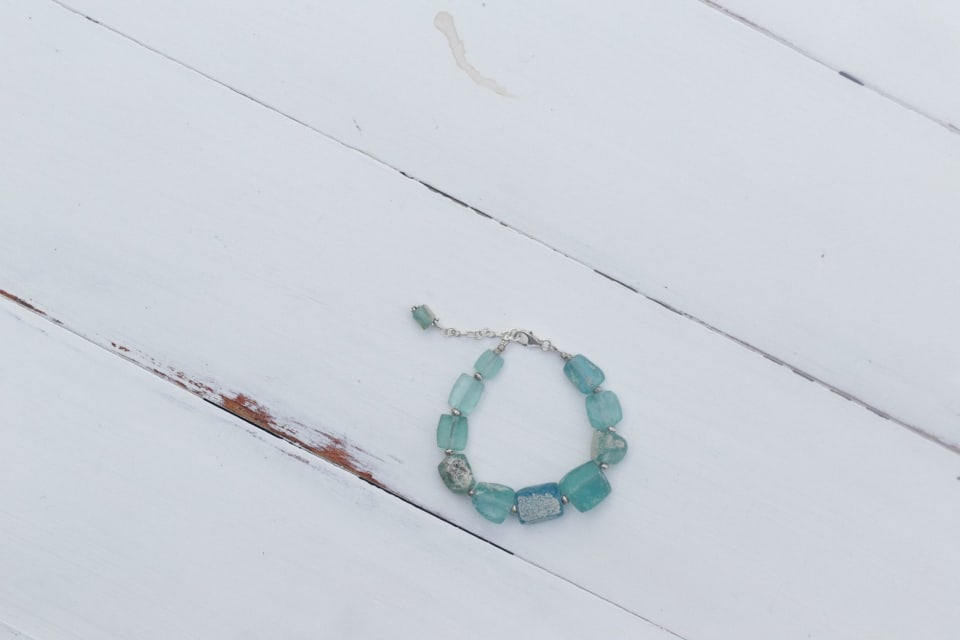
Aquamarine
Aquamarine is a transparent precious stone of a tender blue or greenish-blue colour, a variety of beryl (a relative of the emerald). Its name comes directly from the Latin aqua marina — 'sea water', which perfectly describes its transparent, fresh, wave-like hue. Historically aquamarine was considered a stone of sailors, giving protection on voyages and calm; it symbolises purity, youth and fidelity. The stone has fine transparency and a glassy lustre, facets well, and large clear specimens are especially valuable. Its tender colour makes jewellery fresh and elegant. Aquamarine is a transparent precious stone the colour of sea water, in which a fresh, tender blue combines with an ancient symbolism of the sea, purity and protection, giving jewellery a feeling of cool, crystalline and calm elegance.
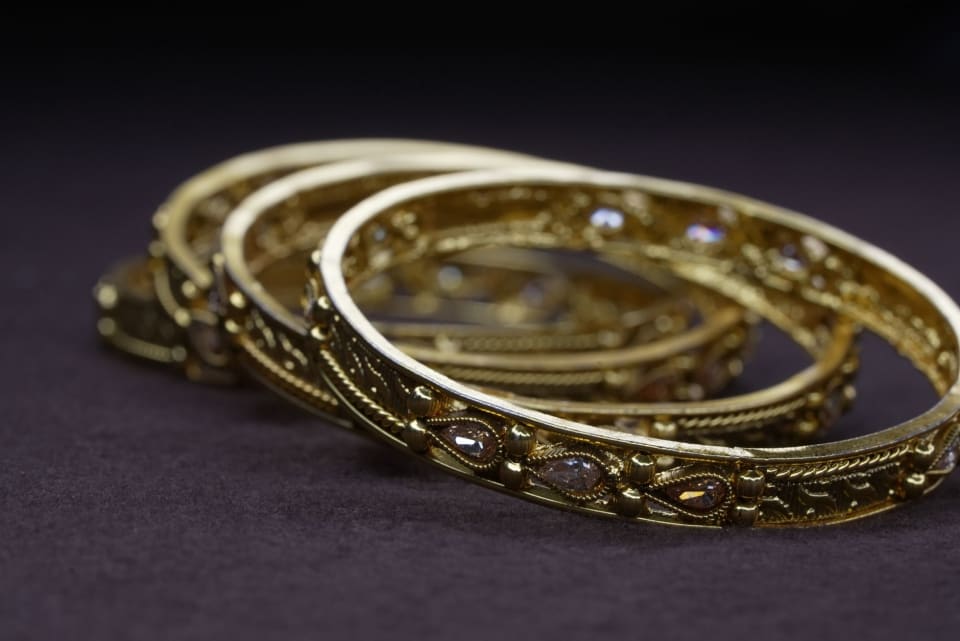
Bangle
A bangle is a bracelet of solid, rigid material (metal, wood, glass, plastic, bone) in the shape of a closed or almost closed ring, slipped over the hand or clasped. Unlike flexible chain bracelets, a bangle holds a clean shape and looks striking, especially when several are worn at once, creating a characteristic jingling sound with movement. Historically such bracelets are one of the oldest ornaments in many cultures (especially in India, where glass bangles have a deep symbolic meaning). They come thin or massive, smooth or adorned. A bangle is an ornament in the shape of a solid ring, in which a rigid material holds a clean, expressive shape, while the tradition of wearing several at once creates a characteristic rhythm, sound and ethnic-decorative accent with ancient cultural roots.
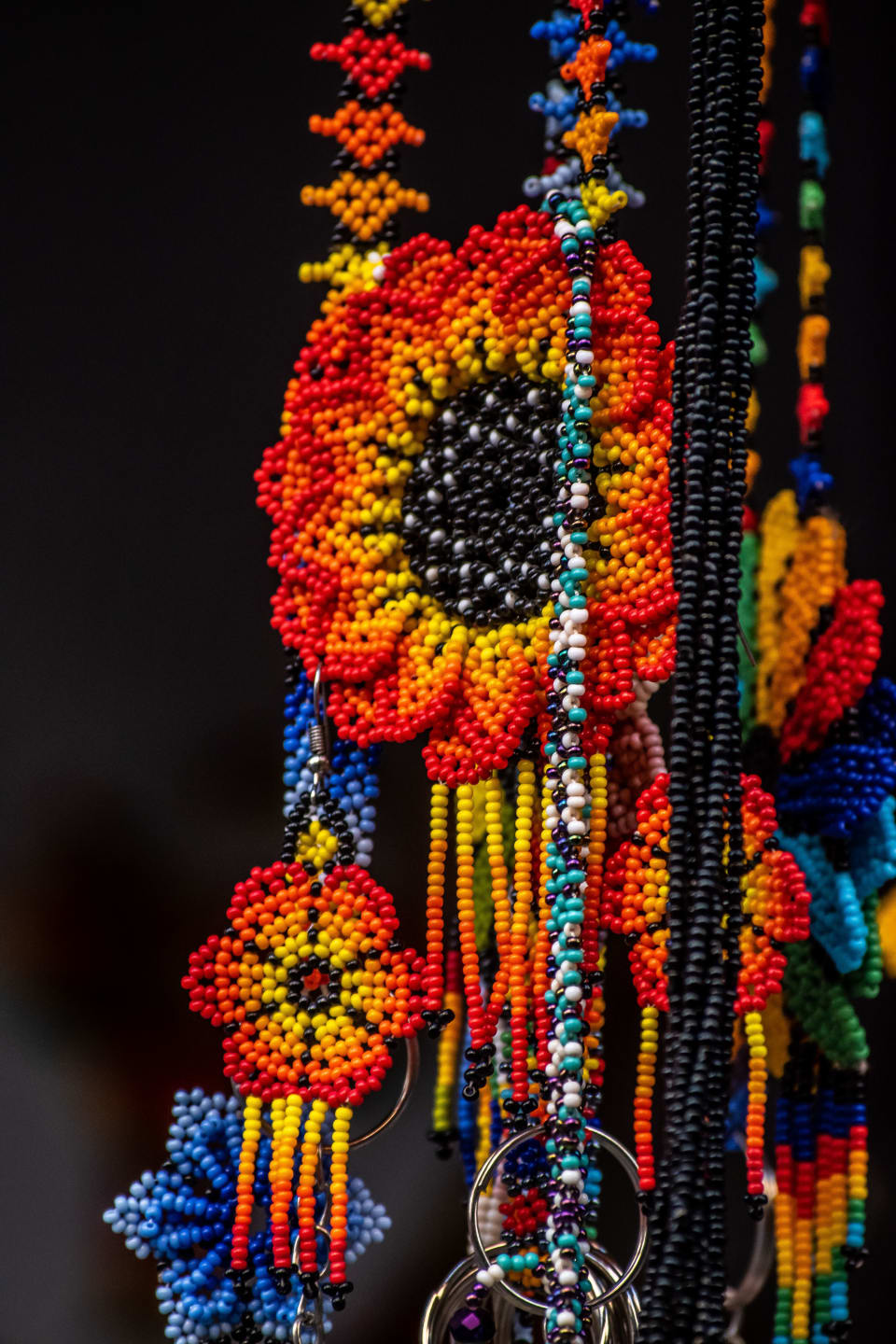
Beadwork
Beadwork is a technique and a type of ornament in which small glass beads are strung and interlaced into patterned webs. In Ukraine beaded adornment is a special pride of folk art: gerdany, also called sylianky (narrow beaded ribbon-necklaces falling over the chest, in places shaped as wide openwork collars), were an obligatory part of festive dress, especially in the Hutsul region and Bukovyna. Each region had its own colours and geometric ornaments, and the very process of beading demanded great patience and precision. Beaded ornaments carry both decorative and symbolic meaning. Today gerdany and sylianky are returning to fashion as a bright, authentic ethnic accent.
Bracelet
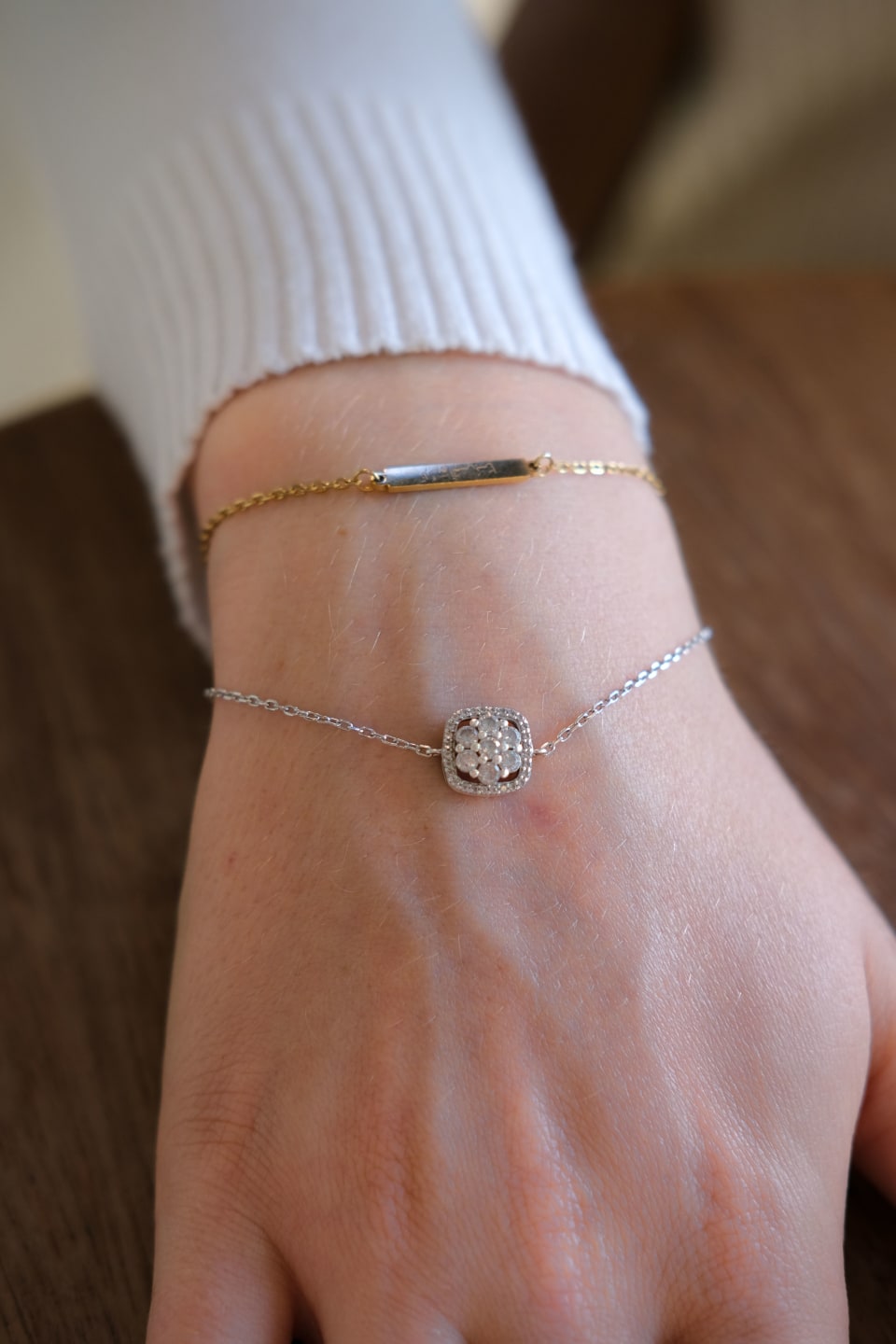
A bracelet is an ornament that encircles the wrist or forearm. It is one of humanity's oldest ornaments: bracelets of bone, bronze and silver are found in burials thousands of years before our era. Historically they had both a decorative and a protective meaning — it was believed that by encircling the arm, a bracelet protected its wearer. The forms are boundless: rigid bangles, chain, plaited, set with stones or with charm pendants that tell a personal story. A bracelet draws attention to the gesture, the wrist and the hand, and pairs beautifully with a watch and rings. It is an ornament that is easy to 'hear' — it moves and sometimes chimes gently in motion.
Bronze
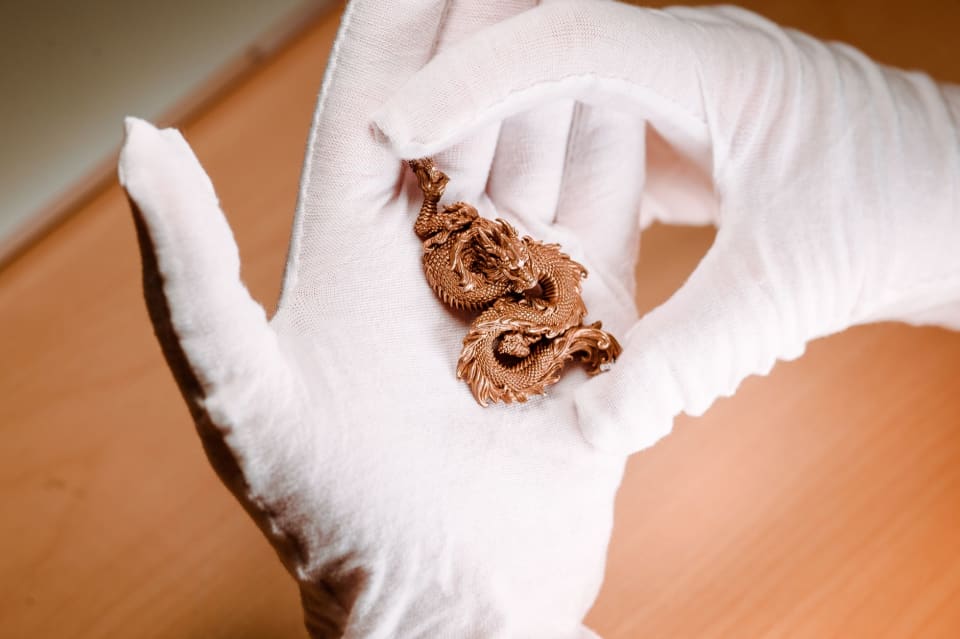
Bronze is an ancient alloy of copper with tin (sometimes with other metals), of a characteristic warm golden-brown colour. It is one of humankind's oldest metals — a whole historical epoch is named the Bronze Age. In jewellery and decorative work bronze is valued for its warm colour, durability and the ability to acquire a noble patina over time. It is used for ethnic and vintage jewellery, buttons, buckles, trimmings and sculptural elements. Bronze is more affordable than precious metals but has its own, 'historical' charm and warmth. It is often used in ethnic, boho and artisan styles. Bronze is an ancient copper alloy of warm golden-brown colour, in which the centuries-old history of the metal combines with durability, a noble patina and a warm, 'historical' character, making it an expressive material of ethnic, vintage and artisan jewellery.
Cabochon
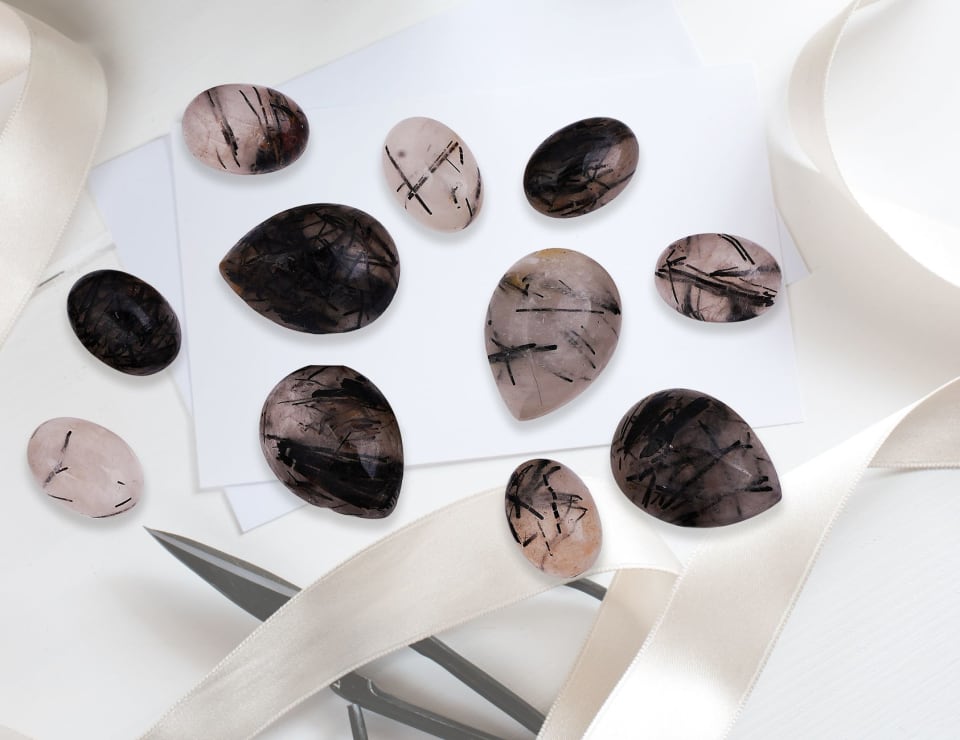
A cabochon is a way of working a precious or semi-precious stone in which it is not faceted but ground and polished to a smooth, convex (most often dome-shaped) form without facets. It is the oldest way of working stones, preceding faceting. Cabochon is used mostly for opaque or translucent stones (turquoise, opal, moonstone, star sapphire, onyx, coral), since the smooth convex surface best emphasises their colour, pattern and special optical effects (like the 'cat's eye' or asterism) that faceting would hide. A cabochon gives an ornament a soft, organic and slightly vintage character. A cabochon is an ancient way of working a stone in a smooth convex form without facets, in which a polished dome best reveals the colour, pattern and optical effects of opaque and translucent stones, giving an ornament a soft, organic and noble character.
Cameo
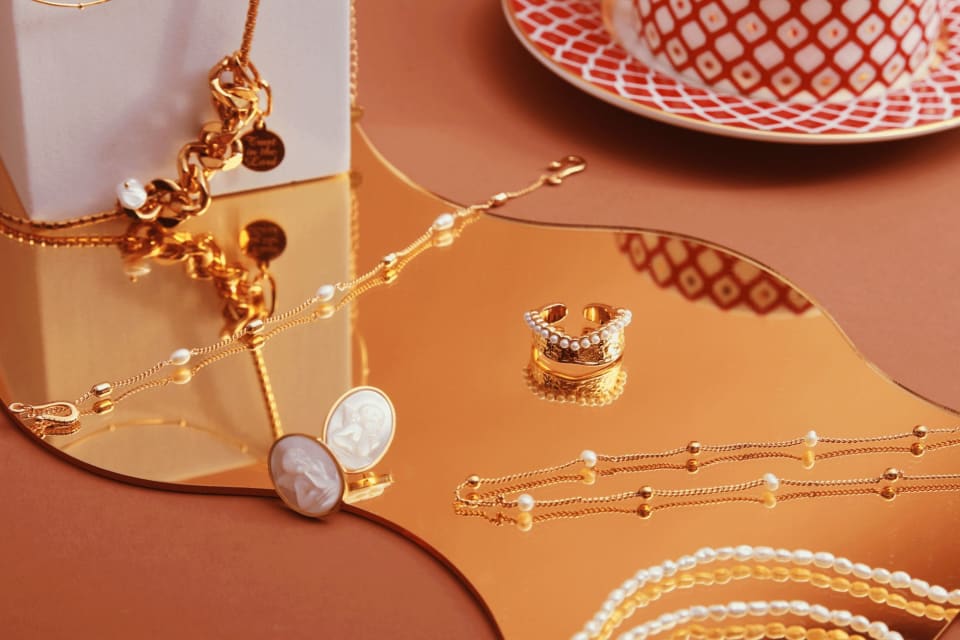
A cameo is an ornament with a raised carved image (most often a profile of a woman's face), carved on stone, shell or another material so that the light relief stands out against a darker ground. This carving technique has been known since antiquity: makers used layered stones (onyx, agate) or shells, where the different colours of the layers created a contrast of figure and ground. Cameos were extremely popular in the Victorian era as refined brooches, pendants and rings. They embody a classic, 'antique' elegance and the mastery of hand carving. A cameo is an ornament with a raised carved image on a contrasting ground, in which the ancient technique of carving layered stone or shell creates a refined miniature bas-relief that embodies classic, vintage elegance and the mastery of the hand with a centuries-old tradition.
Other Fashion Dimensions
Continue Exploring

Related sections




