

The Craft Mastered50 techniques
Techniques
Embroidery, tailoring, knitting — techniques passed down generations.
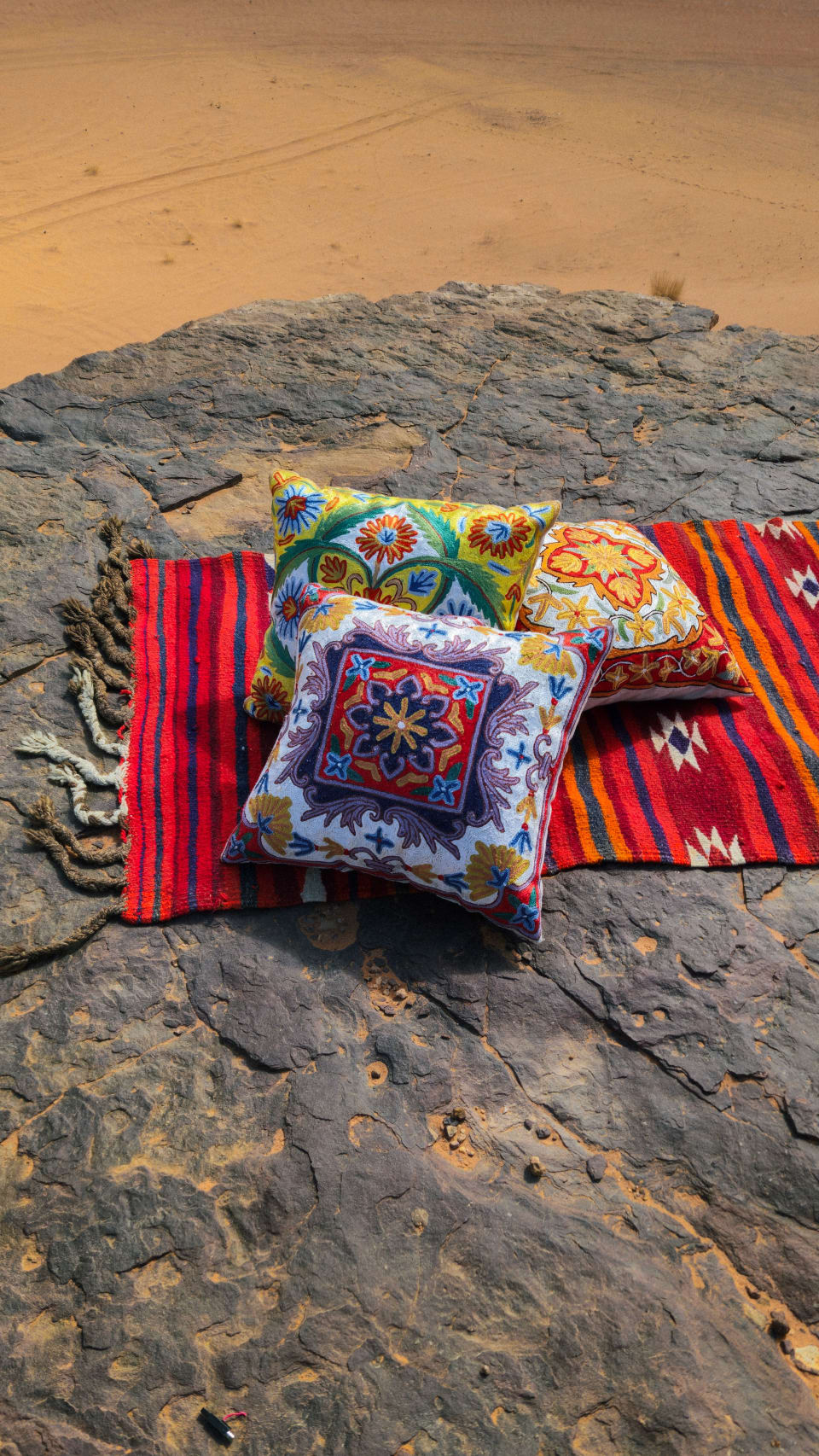
Applique
Appliqué is a decorative technique in which shaped pieces of another fabric, leather or material are sewn or glued onto a base cloth, creating a pattern by layering. Unlike thread embroidery, appliqué works with whole pieces, so it yields large, expressive, often contrasting motifs. Its edges are secured by overcasting, a decorative stitch or trim. Appliqué is used both in folk dress (sewn-on coloured inserts on sheepskin coats and waistcoats) and in modern fashion — from children's clothing to couture dresses with flowers and three-dimensional elements. It is a faster way than solid embroidery to add graphic quality, colour and texture to a look.
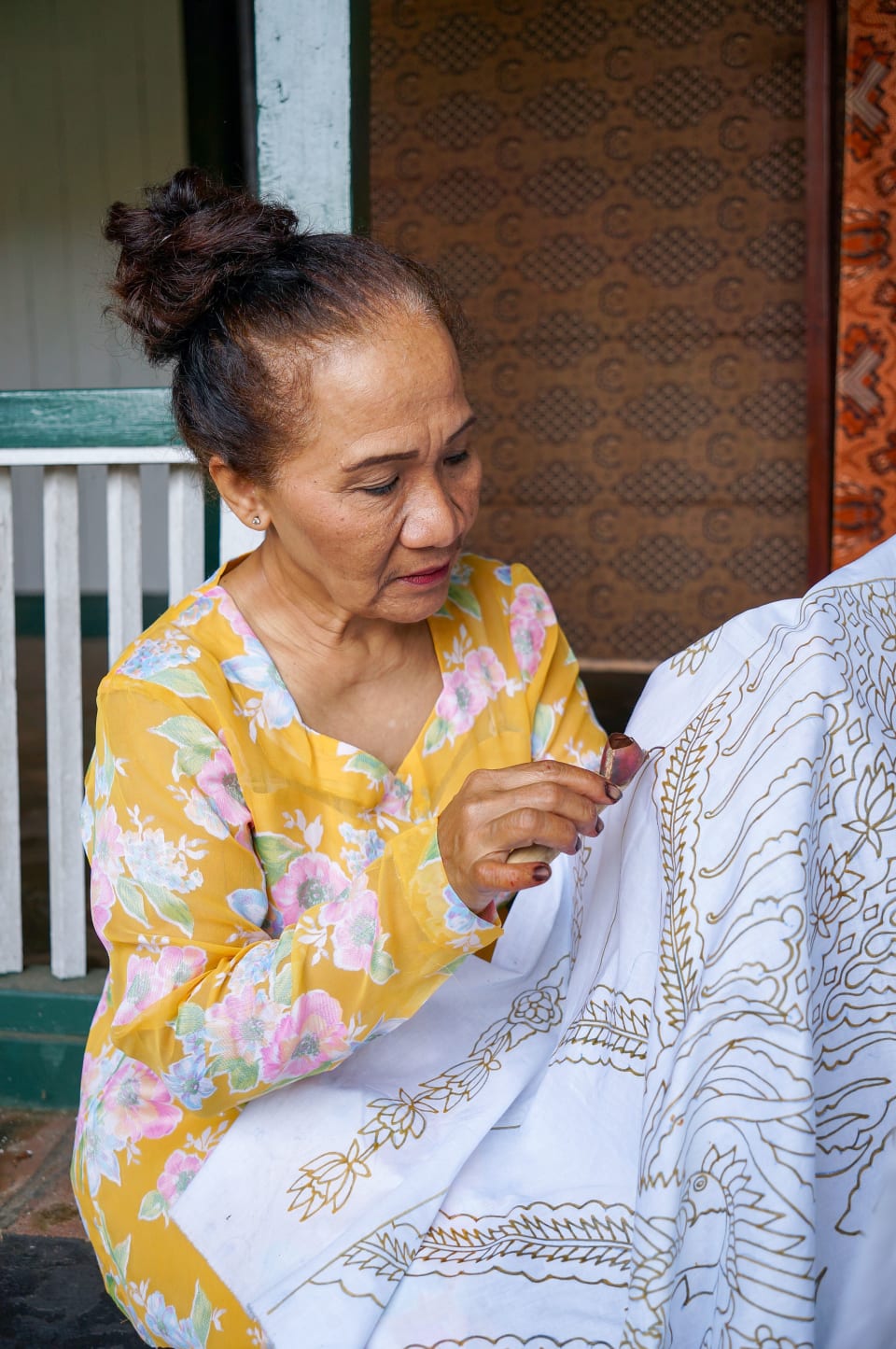
Batik
Batik is a technique of hand-painting fabric using wax as a resist. The maker applies hot wax to the areas that are to stay undyed, then the cloth is dipped in dye, and the wax keeps out the colour; by repeating this with different colours, a multi-layered pattern is built. The word comes from Javanese (Java, Indonesia), where the technique became one of the most sophisticated, while wax-resist dyeing was known since antiquity in other cultures too (Egypt, China, India), but today batik is an international art. Its signature trait is the fine 'marbled' cracks that appear where the wax breaks. Batik is used to paint scarves, dresses, panels and accessories. It is a slow, almost meditative technique in which every piece is unique and carries the maker's hand.
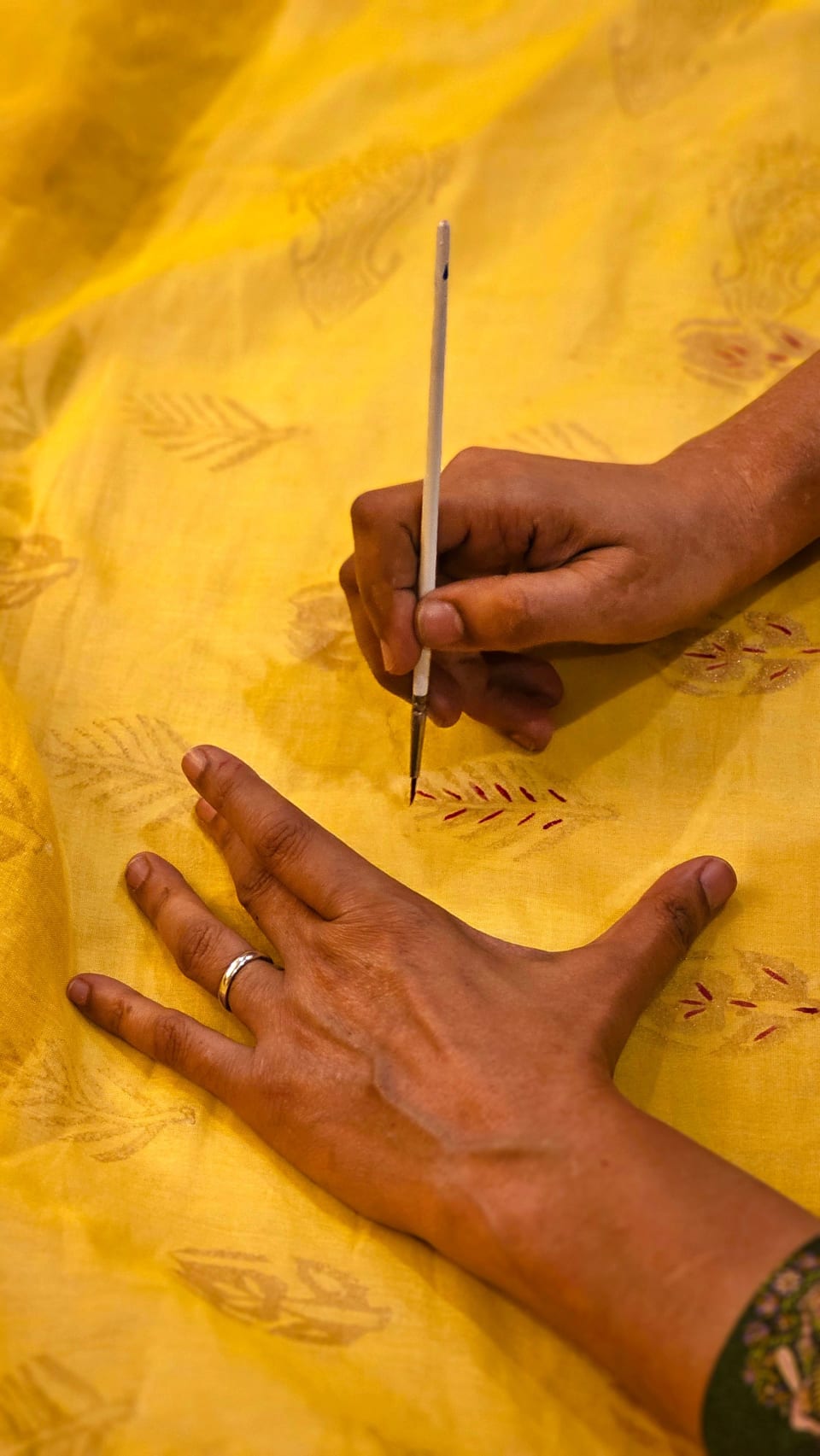
Block printing
Block printing (vybiika, also known as nabiika) is one of the oldest techniques for applying a pattern to cloth using carved wooden stamps, which are dipped in dye and pressed onto the fabric, repeating the motif. In Ukraine block printing was a widespread folk craft: printed fabrics adorned skirts, headscarves and tablecloths, and the master printers carved their own designs. Each stamp is effectively a hand 'seal' of ornament, and the small irregularities of the impression make every metre of cloth alive and unique. This technique combines craft precision with a handmade character. Today block printing is prized as an ecological, authentic alternative to machine printing.
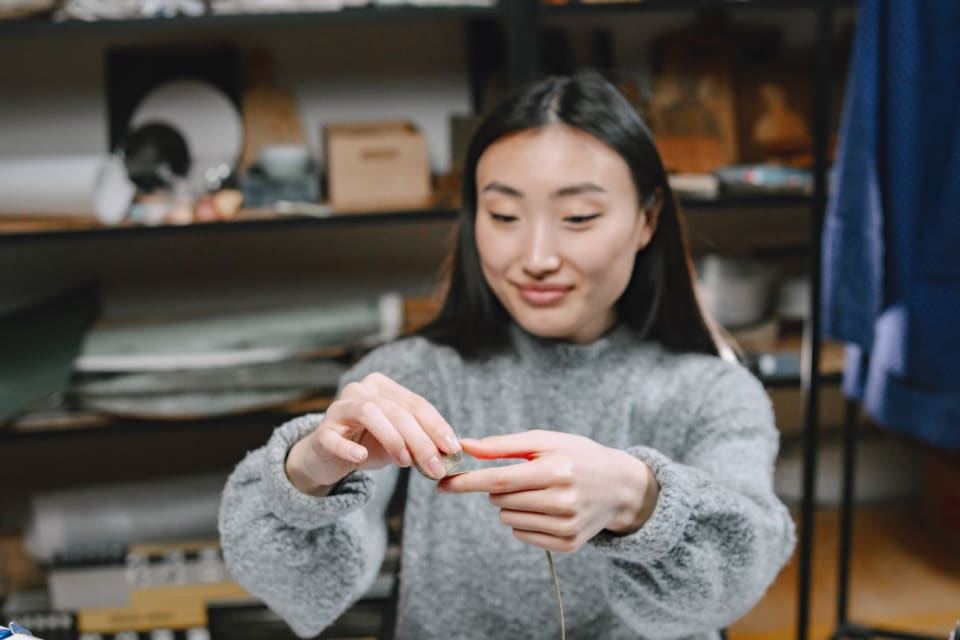
Boro
Boro is a traditional Japanese technique of repairing and piecing fabric from scraps, which arose from the poverty and thrift of peasants: worn clothing was not thrown away but patched and sewn with pieces of old indigo fabric, held together with simple sashiko stitches. From generation to generation, pieces accumulated new patches, acquiring a unique, layered texture and a deep history in each scrap. The word boro means 'rags, tatters', but today the technique is reimagined as an art and a philosophy: it embodies the wabi-sabi aesthetic (the beauty of the imperfect, the old, the mended) and the ideas of conscious, sustainable consumption. In modern fashion boro inspires designers to patchwork, visible mending and upcycling. Boro is a technique of thrifty piecing and repair, in which patching worn fabric with scraps turns into an art of layered beauty that celebrates the history of a piece, imperfection and the philosophy of conscious consumption.
Couching
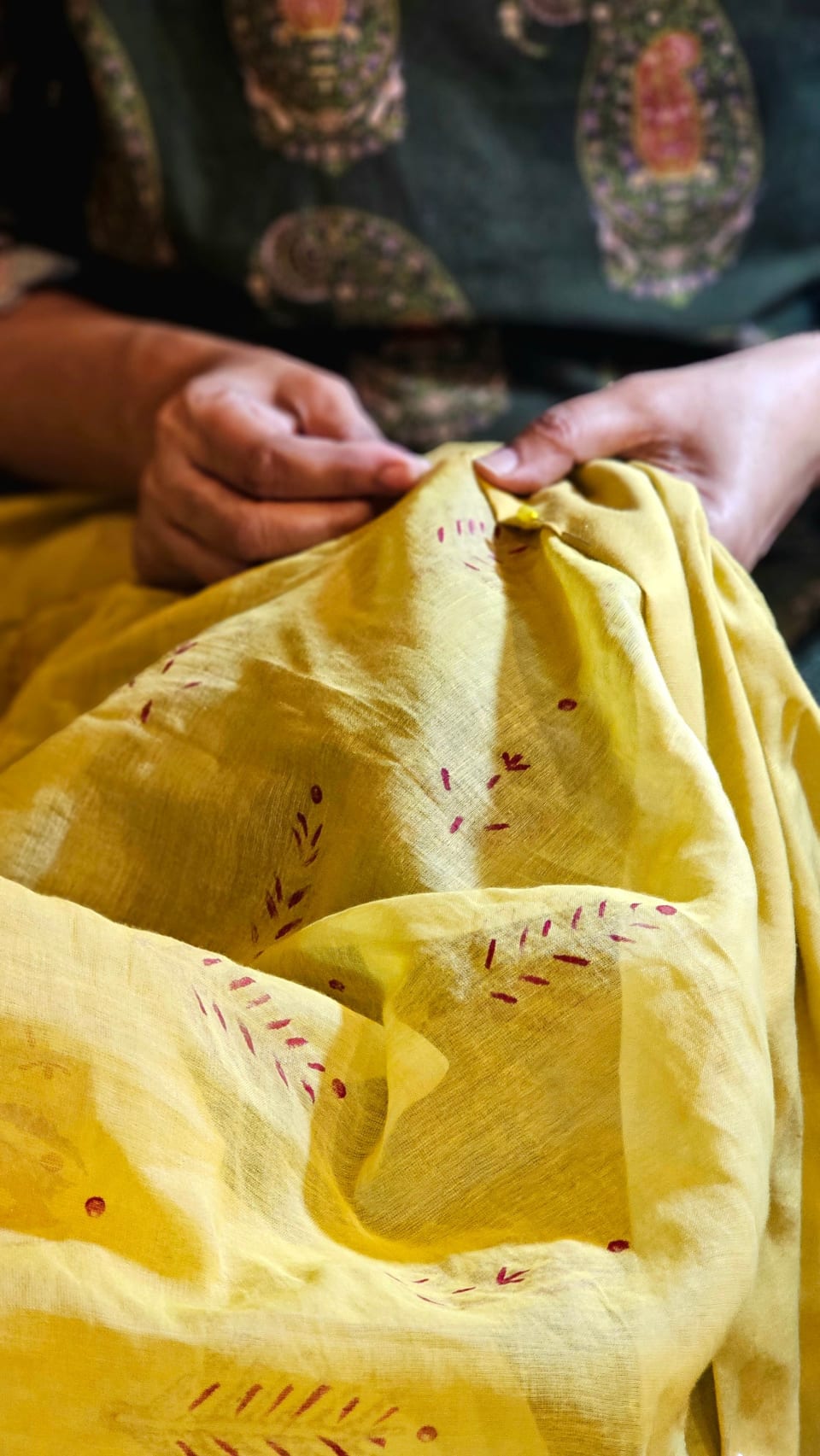
Couching is an ancient embroidery technique in which a metal thread (gold or silver) is not pulled through the cloth but laid on top and fastened to the ground with tiny stitches. This was done because the precious metal thread was too thick and brittle to be drawn through. In Ukraine couching flourished in ecclesiastical and Cossack dress: vestments, shrouds and Hetman regalia embroidered in gold shone with splendour and marked high status. The technique demands incredible precision and patience, and the result is a raised, relief lustre of metal on cloth. Today couching is being revived in high fashion as a symbol of authentic luxury.
Crochet
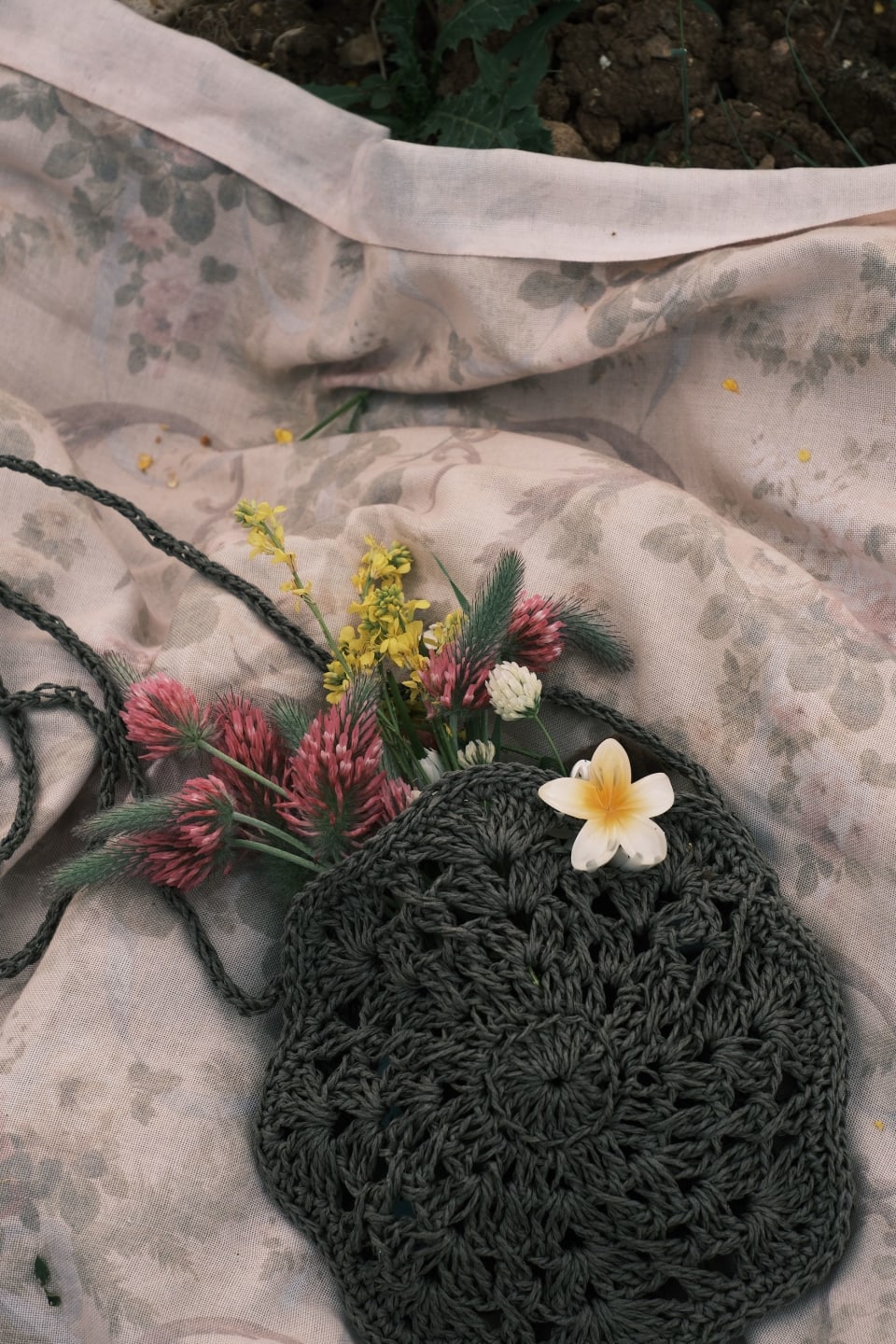
Crochet is the technique of creating a fabric or lace from a single yarn using a hook that pulls loops one through another. Unlike knitting with needles, the hook works with a single active loop, giving a denser, more textured fabric and the ability to easily create openwork, three-dimensional patterns. Crochet makes lace, collars, doilies, shawls, bags and even whole dresses and tops. In Ukrainian tradition crocheted lace adorned linen and clothing as a more accessible alternative to expensive bobbin lace. Today crochet is enjoying a renaissance in fashion — from grandmotherly 'granny squares' to entire hand-made runway collections.
Cross-stitch
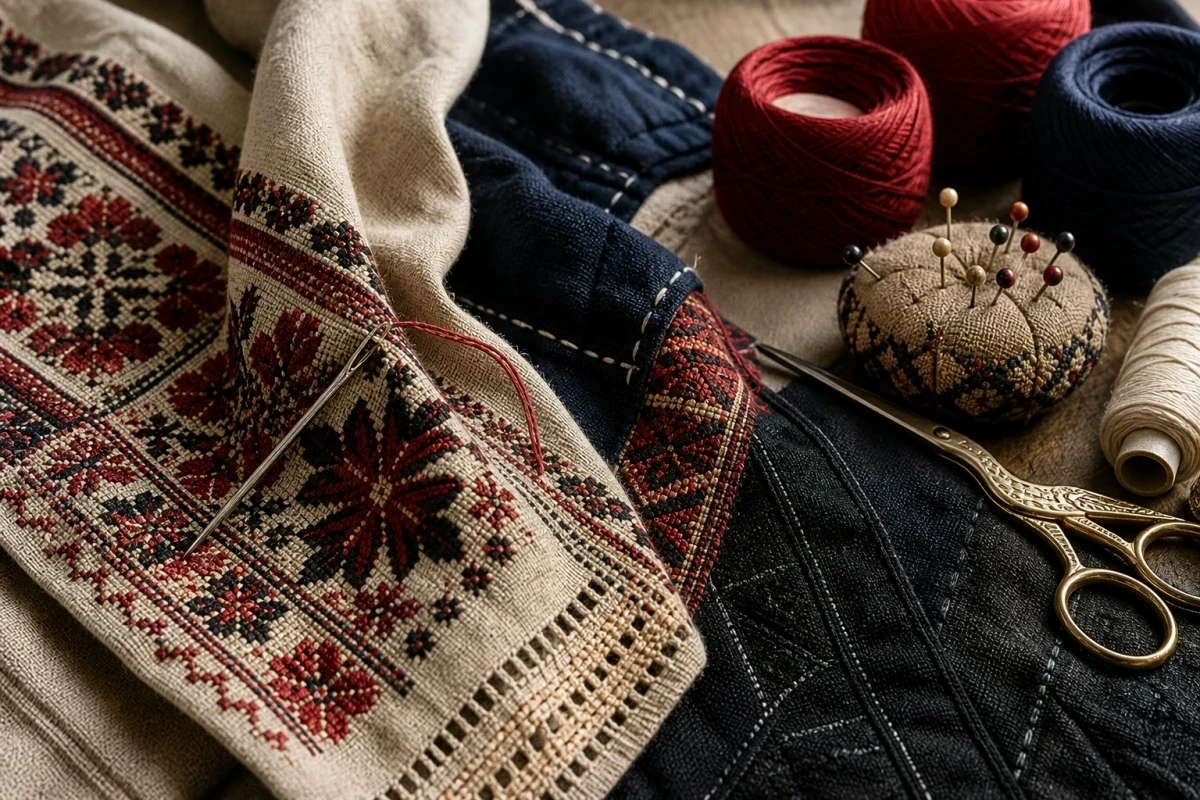
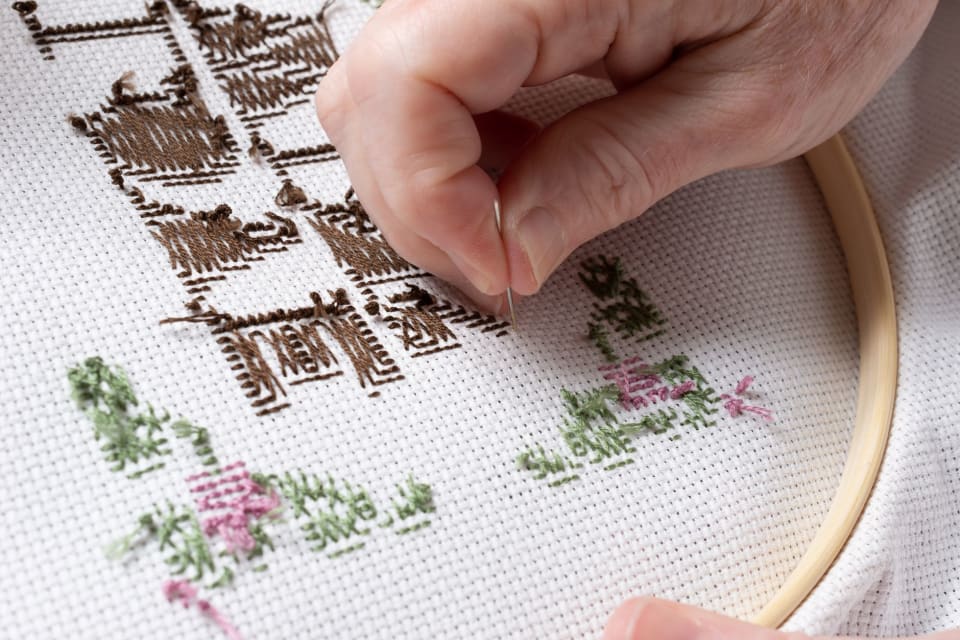
Cross-stitch is one of the oldest and most widespread embroidery techniques, in which the pattern is formed by identical stitches in the shape of a cross (×), set out according to a chart on evenweave fabric. Despite its simple basis, the technique allows extraordinarily complex, multicoloured ornaments and whole pictures to be created. For Ukraine cross-stitch is the heart of the folk tradition: it was used to adorn vyshyvankas, towels and shirts, and each region had its own patterns, colours and symbolism (talismans, floral and geometric motifs). Red-and-black cross-stitch became one of the symbols of Ukrainian culture. The technique requires evenness, rhythm and attention — all the crosses must lie in one direction. Cross-stitch is a technique of deep cultural memory, in which simple stitches build into protective ornaments that carry codes of identity across generations.
Cutwork
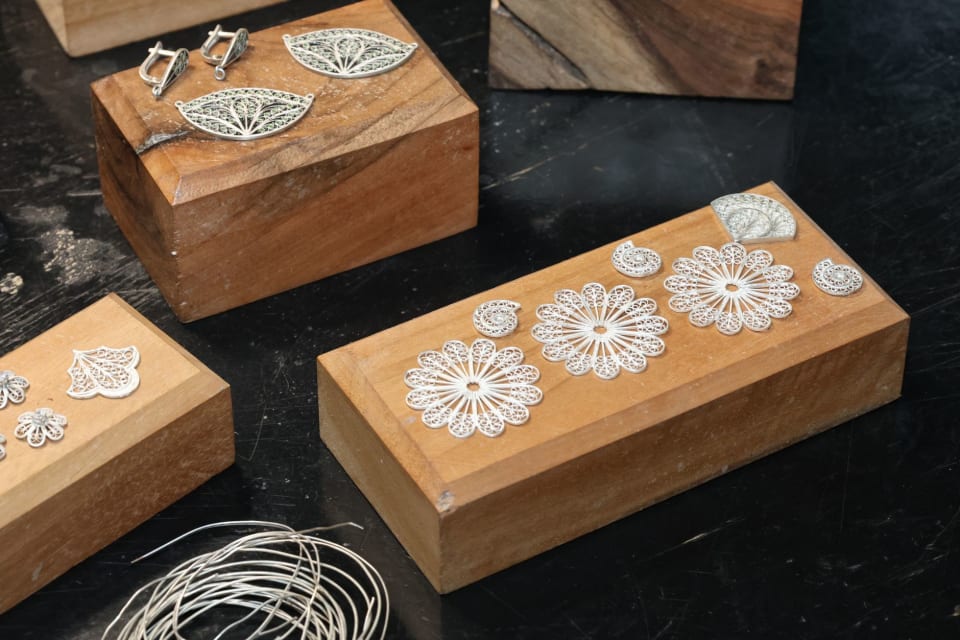
Cutwork (Richelieu) is a technique of openwork embroidery in which part of the fabric inside the pattern is cut away and the edges are finished with a buttonhole stitch, joining the motifs with thin bars (brides). Thus a light, airy lace arises directly on the cloth. The name is linked to Cardinal Richelieu, under whom the technique flourished in France, but in Ukraine it became an inseparable part of folk embroidery and linen — towels, shirts, tablecloths. Cutwork demands precision and patience: first the outline is embroidered, then the fabric is carefully cut away without damaging the stitch. The result is a refined, 'transparent' pattern combining dense and openwork areas. In modern fashion cutwork is valued for its handmade refinement. It is a technique of tender, airy lace, in which the skill of the hands turns ordinary cloth into a transparent, precious-looking fabric.
Diamond
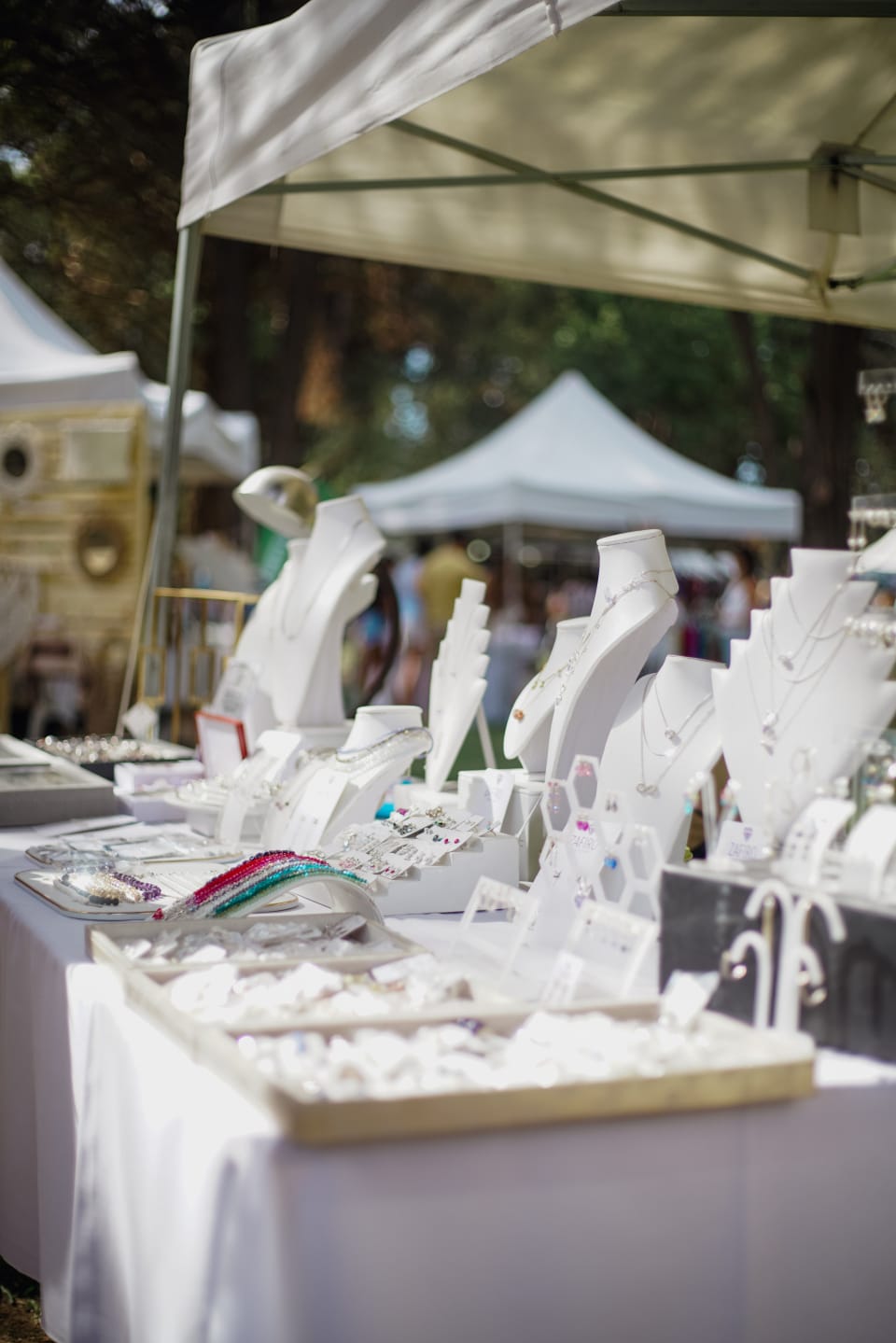
A cut diamond (brilliant) is a gem-quality diamond that has been cut and polished, the hardest natural material and at the same time the most desired precious stone, working with which is a distinct summit of the jeweller's craft. The art of cutting turns an unremarkable natural crystal into a radiant jewel: the master calculates dozens of facets so that light enters the stone, reflects fully within and returns as dazzling brilliance, while dispersion splits it into flashes of colour ('fire'). A diamond's quality is graded by the '4Cs' — carat (weight), cut, clarity, colour. The classic round brilliant cut with 57 facets is the benchmark, calculated mathematically for maximum brilliance. The diamond has for centuries symbolised eternity, purity and permanence, and so became the stone of engagement and the most ceremonial ornaments. It is the quintessence of the precious, in which nature and the precise mastery of man are fused into one.
Digital printing
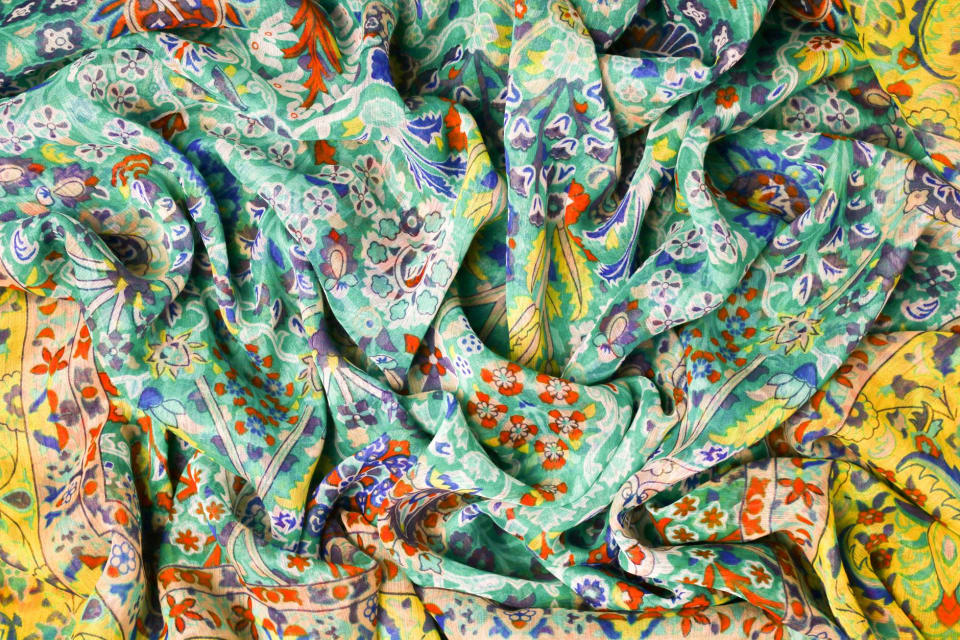
Digital printing is a modern technique of applying an image to fabric directly from a digital file using special inkjet printers that spray ink straight onto the cloth. Unlike stencil-based screen printing, digital printing needs no separate stencils for each colour, so it allows photographically complex, multicoloured images with fine gradients and countless shades to be reproduced without limit. It is ideal for small runs, individual orders and complex prints, giving high detail and speed. At the same time, large runs of simple images are cheaper to print by screen printing. Digital printing opened up almost boundless freedom for designers in creating prints. Digital printing is a technique of modern, high-precision image application, in which direct printing from a file onto fabric combines photographic detail, unlimited colour and flexibility, opening new possibilities for print design.
Other Fashion Dimensions