

The Craft Mastered12 techniques
Techniques
Embroidery, tailoring, knitting — techniques passed down generations.
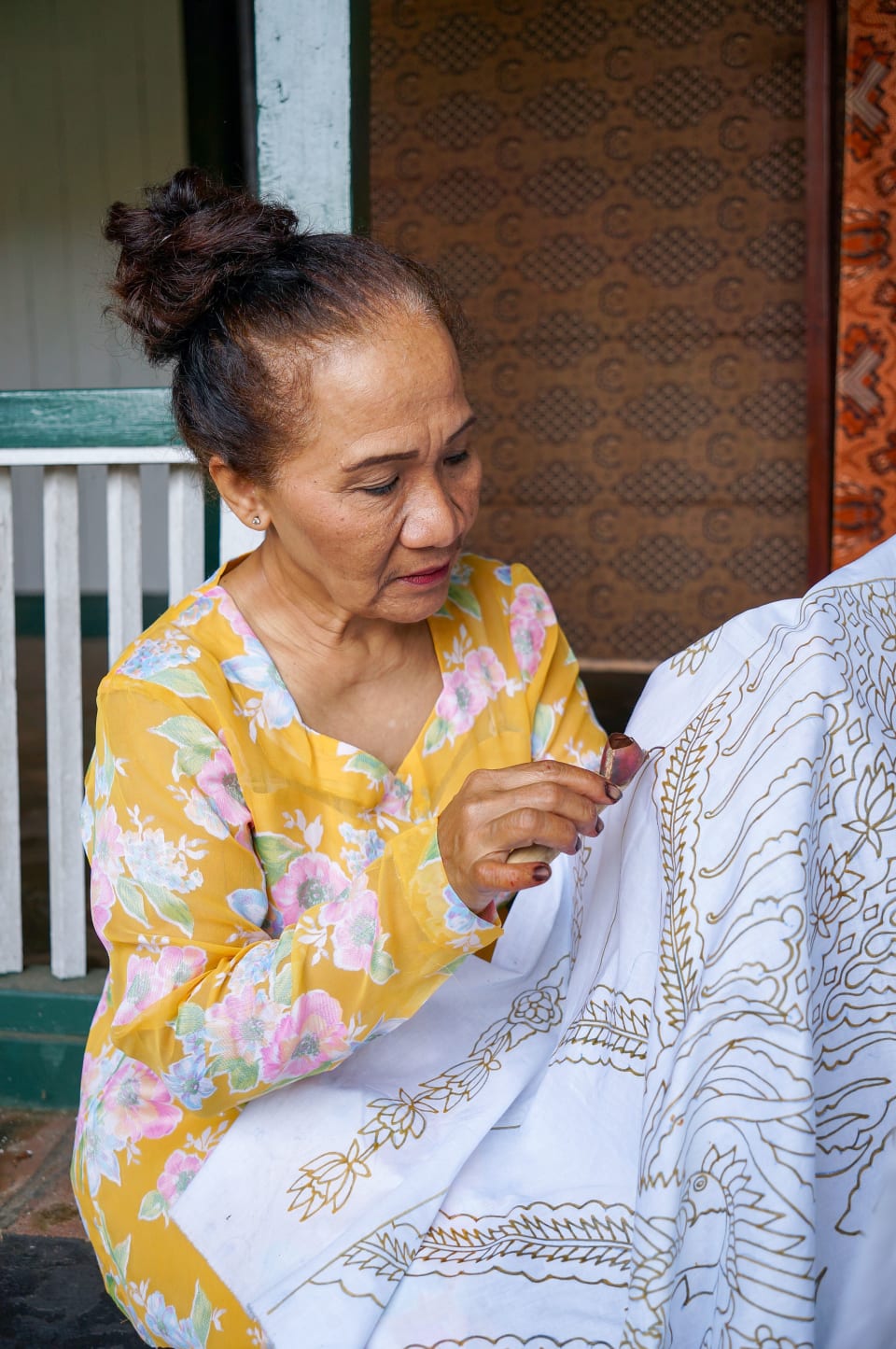
Batik
Batik is a technique of hand-painting fabric using wax as a resist. The maker applies hot wax to the areas that are to stay undyed, then the cloth is dipped in dye, and the wax keeps out the colour; by repeating this with different colours, a multi-layered pattern is built. The word comes from Javanese (Java, Indonesia), where the technique became one of the most sophisticated, while wax-resist dyeing was known since antiquity in other cultures too (Egypt, China, India), but today batik is an international art. Its signature trait is the fine 'marbled' cracks that appear where the wax breaks. Batik is used to paint scarves, dresses, panels and accessories. It is a slow, almost meditative technique in which every piece is unique and carries the maker's hand.
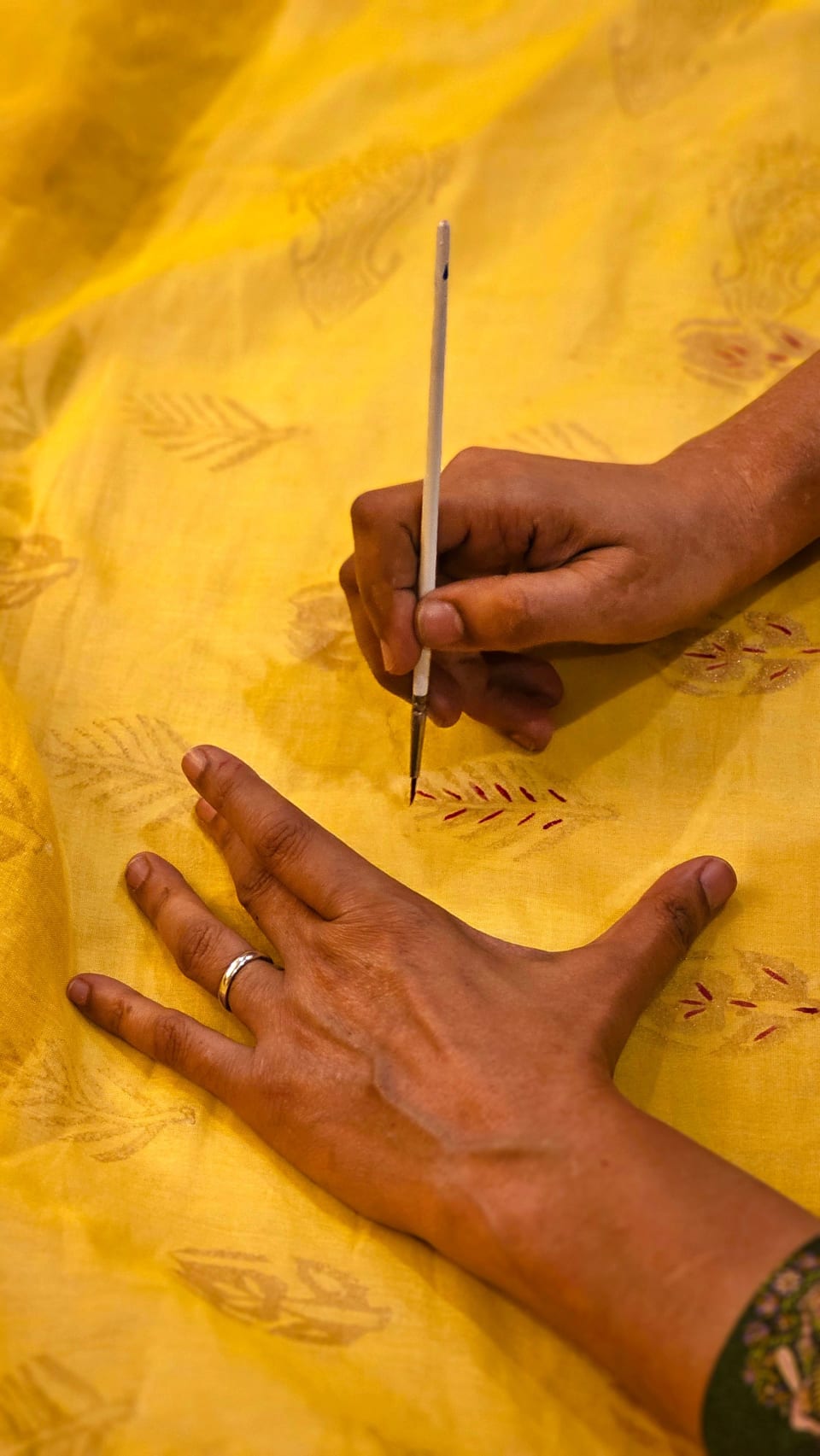
Block printing
Block printing (vybiika, also known as nabiika) is one of the oldest techniques for applying a pattern to cloth using carved wooden stamps, which are dipped in dye and pressed onto the fabric, repeating the motif. In Ukraine block printing was a widespread folk craft: printed fabrics adorned skirts, headscarves and tablecloths, and the master printers carved their own designs. Each stamp is effectively a hand 'seal' of ornament, and the small irregularities of the impression make every metre of cloth alive and unique. This technique combines craft precision with a handmade character. Today block printing is prized as an ecological, authentic alternative to machine printing.
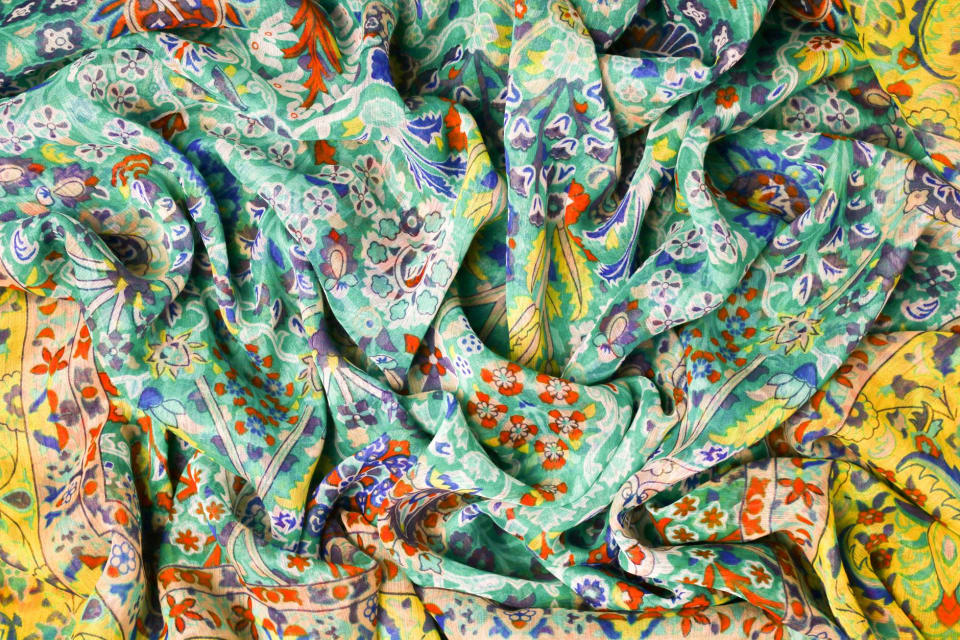
Digital printing
Digital printing is a modern technique of applying an image to fabric directly from a digital file using special inkjet printers that spray ink straight onto the cloth. Unlike stencil-based screen printing, digital printing needs no separate stencils for each colour, so it allows photographically complex, multicoloured images with fine gradients and countless shades to be reproduced without limit. It is ideal for small runs, individual orders and complex prints, giving high detail and speed. At the same time, large runs of simple images are cheaper to print by screen printing. Digital printing opened up almost boundless freedom for designers in creating prints. Digital printing is a technique of modern, high-precision image application, in which direct printing from a file onto fabric combines photographic detail, unlimited colour and flexibility, opening new possibilities for print design.
Dyeing
Dyeing is the technique of giving cloth or yarn colour by means of dyes. Historically humanity used natural dyes: plants (madder gave red, woad blue, onion skins yellow), insects and minerals; in Ukraine dyeing with plant dyes was an inseparable part of the weaving and embroidery crafts. Modern dyeing is a whole science of dye types, temperature, colour-fastness and evenness. There are also artistic techniques — tie-dye, ombré, shibori — where the dyeing itself becomes the pattern. Correct dyeing determines not only the colour but also whether the piece will later fade or bleed. It is the foundation of the entire colour culture of fashion.
Embossing
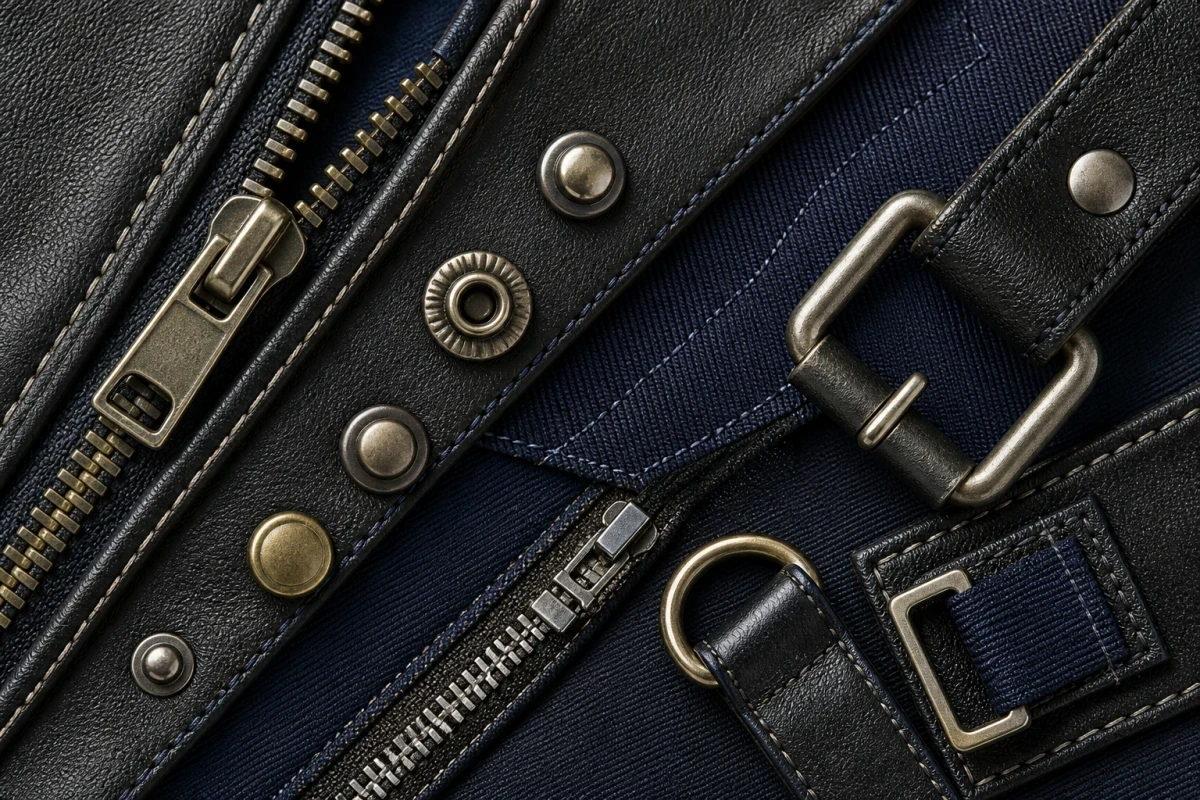
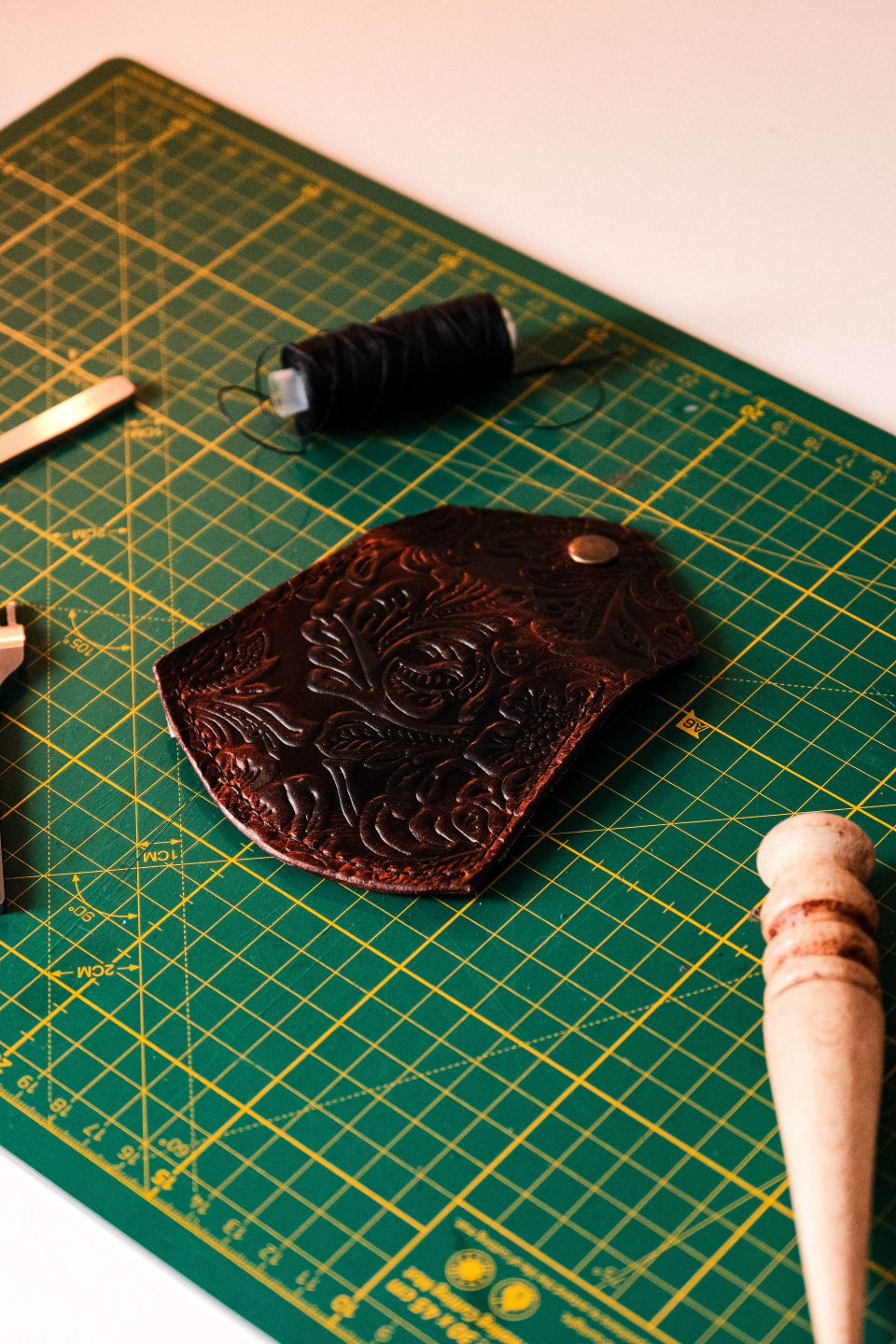
Embossing is a technique of creating a relief pattern on the surface of a material (most often leather, but also fabric or paper) by pressing a heated shaped die or stamp under pressure. The design is not applied with dye but 'pushed' into the material itself, so it is tangible to the touch and does not wear off like print. Embossing on leather has an ancient craft tradition: it decorated belts, wallets, book covers, footwear and accessories, imitating textures (for example, 'reptile') or applying ornaments and monograms. This technique adds a sense of quality, depth and status detail to a piece. Embossing can be blind (without colour) or with foil — gold or silver.
Fabric painting
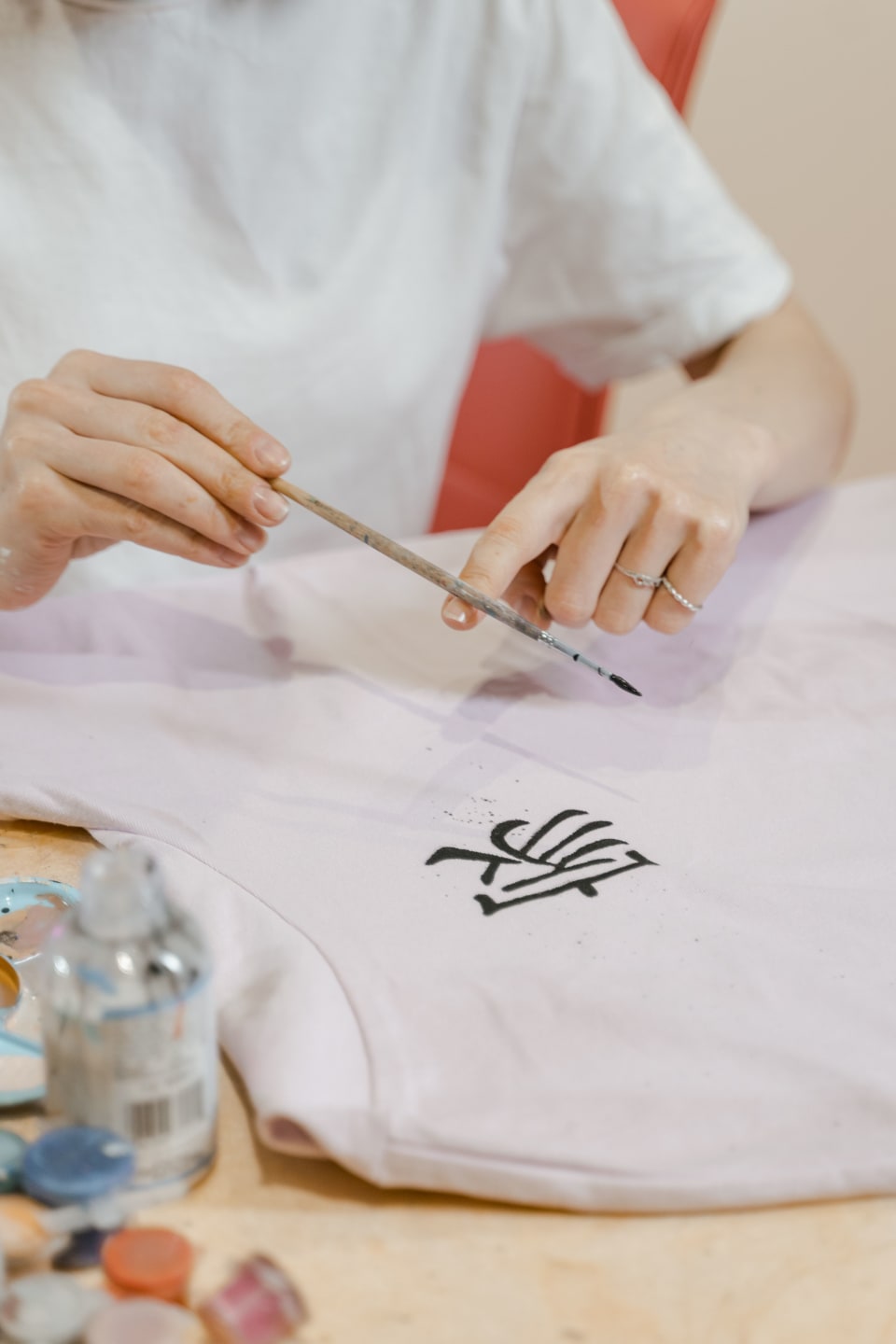
Fabric painting is a technique of applying a pattern by hand with special paints directly onto the cloth, as onto an artist's canvas. Unlike printing, which reproduces an identical design, painting is always unique and carries the artist's hand: free brushstrokes, colour transitions, an author's subject. There are various techniques — free painting, resist (outline) painting, cold and hot batik. In Ukrainian folk art a kindred tradition is painted decoration (recall Petrykivka painting carried over onto textiles). Painting turns a garment or scarf into a wearable work of art. This technique is slow and personal, so every painted piece is a kind of picture you can wear.
Flocking
Flocking is a technique of applying tiny fibres (flock) to the surface of fabric (or another material), which, with the help of glue and an electrostatic field, are fixed vertically, forming a velvety, fuzzy texture. Thus a soft, velvety pattern or a solid coating is created on a smooth base. Historically flock imitated expensive velvet, and today it is used both for decorative prints (for example, velvety patterns on T-shirts, wallpaper, packaging) and for functional coatings. A flocked pattern is pleasant to the touch, three-dimensional and stands out strikingly against a smooth ground. The technique requires precision in applying the glue and evenness of the pile. In fashion flock is valued for its tactility and the decorative contrast of textures. Flocking is a technique of creating a velvety texture, in which fixing tiny fibres to a surface gives fabric a soft, velvety relief that combines decorativeness with pleasant tactility.
Ombre
Ombre is a technique of gradient dyeing, in which colour transitions smoothly from one shade to another (most often from saturated to light or from one colour to a neighbouring one), creating a soft, blurred transition with no sharp boundary. The name comes from the French ombré — 'shaded'. The effect is achieved by gradually immersing the fabric in dye, spraying, or hand-blending the colour. Ombre gives a piece depth, movement and a modern, 'watercolour' look. It is widely used in dresses, skirts, scarves, and also in hair colouring. Ombre is especially striking in flowing fabrics, where the colour transition emphasises the drape. Ombre is a technique of smooth colour transition, in which the blurred fading of one shade into another creates an effect of depth, tenderness and modern, almost painterly elegance, giving a piece soft movement and refinement.
Screen printing
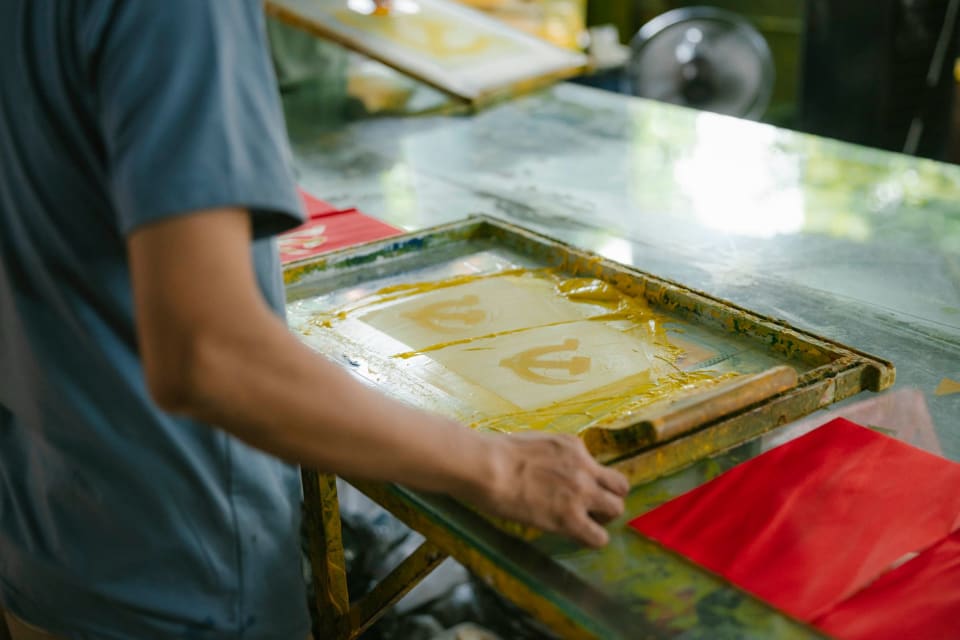
Screen printing (stencil printing) is a technique of applying an image to fabric, in which ink is pushed through a fine mesh stencil where the unneeded areas are blocked and the pattern stays open. A separate stencil is made for each colour, so the ink lies in a dense, saturated and durable layer. Historically the technique descends from ancient stencil printing (silk screens), and in the 20th century it was made famous by pop art (recall Andy Warhol). Screen printing is the basis of the mass production of T-shirts, hoodies and printed clothing: it gives a bright, wash-resistant result and is cost-effective in large runs. For complex multicoloured images, precision in registering the stencils is needed. Screen printing is a technique of dense, saturated printing, in which pushing ink through a stencil creates bright, durable images on fabric that combine graphic expressiveness with suitability for mass production.
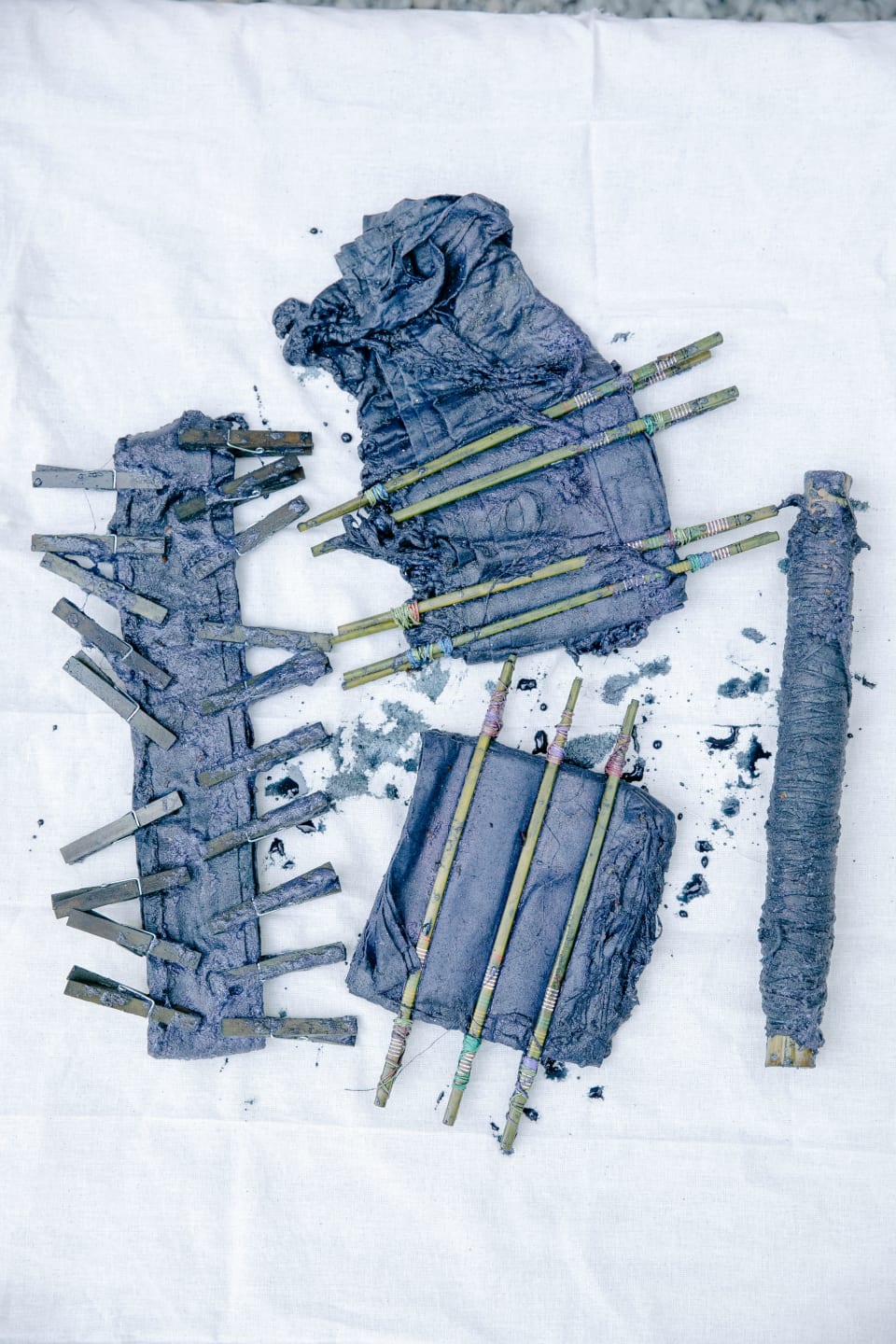
Shibori
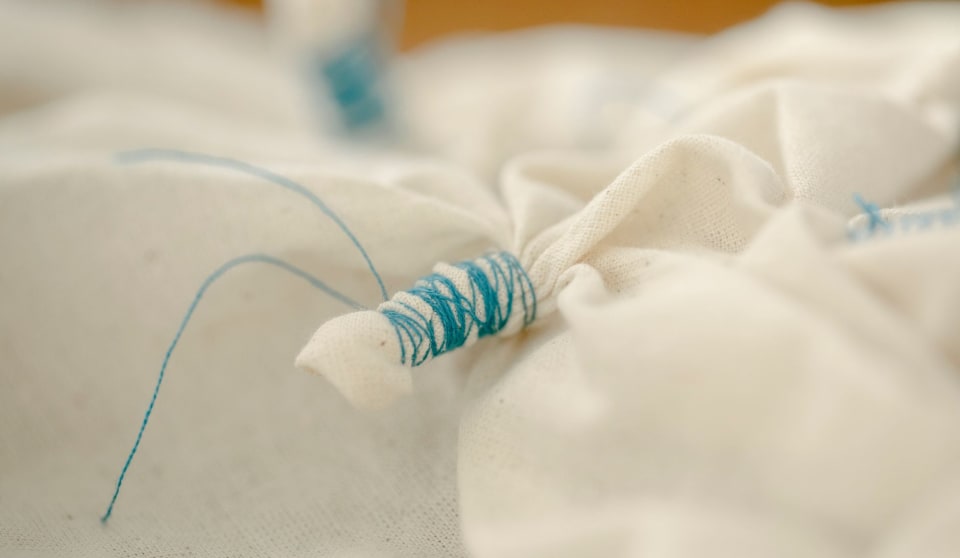
Shibori is an ancient Japanese technique of resist dyeing of fabric, in which the cloth, before being immersed in dye (traditionally indigo), is folded, twisted, tied, sewn or clamped to protect part of the fibre from the colour. Where the fabric was drawn together, light, 'undyed' areas remain, forming characteristic organic patterns — circles, waves, 'cobwebs', gradients. Every piece is unique, since a pattern cannot be exactly repeated. Shibori is a Japanese form of tie-dye (practised since the 8th century), but far finer and more refined. The technique requires mastery in tying and an understanding of the behaviour of the dye. In fashion shibori is valued for its deep, 'living' colour and the uniqueness of each pattern. Shibori is a technique of resist dyeing as an art, in which the masterful folding and binding of fabric before dyeing creates unique, organic patterns of deep indigo with a fine Japanese aesthetic.
Other Fashion Dimensions